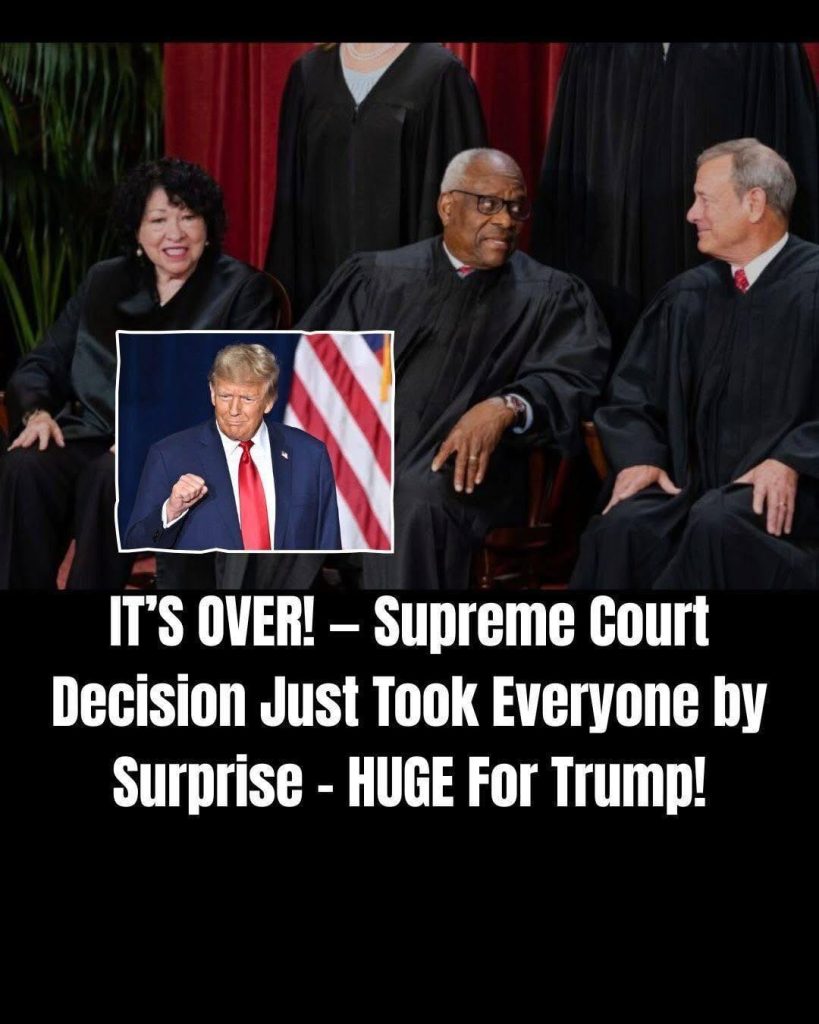
A recent Supreme Court decision has drawn national attention following an 8–1 ruling in a closely watched immigration case. The decision addressed questions surrounding Temporary Protected Status (TPS), a program that allows eligible individuals from certain countries experiencing extraordinary conditions to live and work in the United States for a limited period under federal authorization.
The case focused on the administration of TPS and the extent of executive authority in making decisions related to the program. By ruling on the matter, the Court allowed the federal government to proceed with policy changes affecting TPS protections for a large number of Venezuelan nationals. The decision highlighted the legal framework governing immigration policy and executive branch responsibilities.
Supporters of the ruling argue that it reinforces the authority of the executive branch to manage immigration programs within the scope of federal law. They maintain that TPS is designed as a temporary measure and that decisions regarding its continuation fall within the government’s policy discretion. Others have emphasized the importance of maintaining clear legal standards for immigration programs and administrative decision-making.
Critics of the decision have expressed concerns about its potential impact on individuals and families currently benefiting from TPS protections. The ruling has renewed discussion about immigration policy, humanitarian considerations, and the balance between executive authority and long-term stability for affected communities. As policymakers and stakeholders continue to evaluate the decision, it remains a significant development in the ongoing national conversation about immigration and public policy.