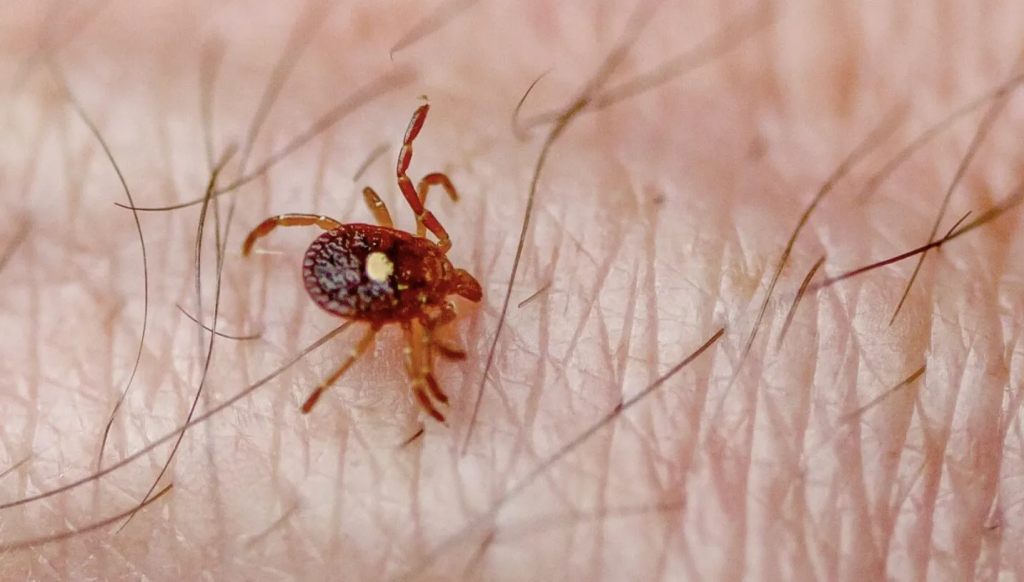
A few weeks ago, I was taking care of routine yard work using an older lawn mower while my dog relaxed nearby in the shade. During the process, I noticed a light sensation near my ankle and initially assumed it was something minor. After checking, I found a very small dark insect attached to my skin. I removed it carefully and realized it was a lone star tick, identifiable by a light-colored marking.
Encounters like this can be surprising, especially during outdoor activities. While many insects are mostly harmless and cause only temporary discomfort, ticks require closer attention. They can attach firmly and remain unnoticed for some time, which is why it is important to stay aware when spending time in grassy or wooded areas.
Ticks are commonly found in natural environments and are known for attaching to people and animals. Some species are associated with health concerns, making early detection and proper removal important. The lone star tick, in particular, is known for being more active than other varieties, which increases the chance of contact during outdoor tasks.
The lone star tick gets its name from the single light-colored spot found on adult females. Unlike ticks that wait passively, this species actively moves in search of a host. Because of this behavior, recognizing it quickly and responding appropriately can help reduce unwanted exposure. Staying informed and taking simple precautions can make outdoor activities safer and more comfortable.