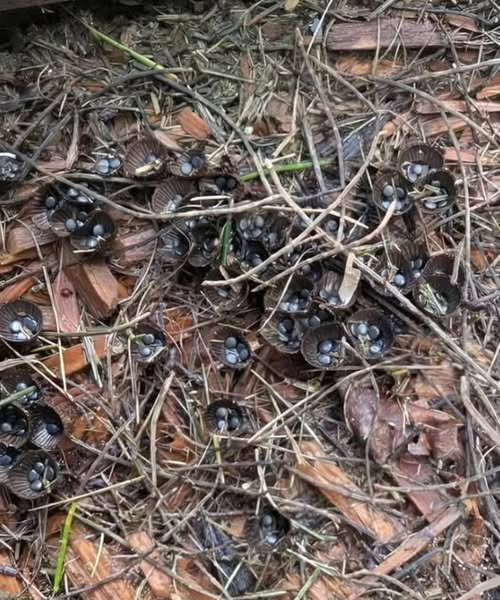
During a visit to a friend’s home, an ordinary walk through the garden turned into an unexpected moment of interest. Between two flowerbeds, we noticed small, round formations that looked like tiny nests filled with bead-like shapes. At first, we wondered if they were seeds, insect eggs, or even decorative items. Their consistent shape and neat arrangement stood out, sparking conversation and curiosity as none of us recognized what we were seeing.
To get some clarity, we shared photos with my friend’s grandfather, an experienced gardener with years of hands-on knowledge. As soon as he saw the images, he recognized them and explained that they were birds’ nest mushrooms, a unique type of fungus. Their name comes from their unusual appearance, as they closely resemble miniature nests holding small eggs. Those bead-like pieces are actually spore capsules that play a role in reproduction.
He went on to explain how these mushrooms spread naturally. When rain falls into the cup-shaped nests, the droplets hit the capsules and send them outward into the surrounding soil. This process helps the spores travel and grow in nearby areas. Learning about this simple yet effective system highlighted how many natural processes happen quietly in gardens without being noticed.
After that discovery, the garden felt different to us. What once seemed like ordinary soil and plants now appeared full of hidden activity and detail. The experience encouraged us to slow down and observe our surroundings more closely. Those small mushrooms served as a reminder that nature often reveals its most interesting stories in subtle ways, offering moments of curiosity and appreciation in the most familiar places.