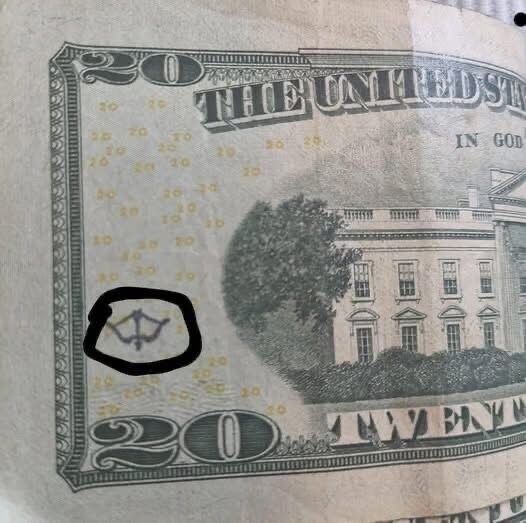
Most people use cash without paying much attention to its details, focusing only on the amount before putting it away. Occasionally, however, a bill may catch the eye because of a small stamped symbol or unusual mark near the edge or portrait. One example that often raises questions is a shape resembling a bow and arrow, which can look confusing or even suspicious at first glance. Many people wonder whether such marks are damage, random defacement, or signs of something improper.
These markings are actually part of a long-standing practice known as chop marking. Chop marks are informal verification stamps that indicate a bill has been inspected and accepted in places far from where it was originally issued. Rather than reducing value, they reflect trust and use in real-world transactions. Each mark quietly records that the currency passed through hands where confirmation mattered more than appearance.
The tradition dates back hundreds of years to ancient trade systems, particularly in China, where merchants verified metal coins by testing weight and purity. Once satisfied, they stamped the coins with a personal symbol to show approval. Over time, coins that carried multiple stamps were often seen as more reliable because they had been repeatedly checked. As currency systems evolved and paper money became common, the same idea continued using ink stamps instead of physical punches.
Today, these marks are most often found on U.S. bills that have circulated internationally, especially in parts of Asia, Africa, and Latin America where cash verification is done visually and quickly. Traders and money handlers use these symbols to signal that a bill has already been examined and trusted. In the United States, banks generally accept these bills at full value. Beyond their usability, they offer a quiet reminder that ordinary money can travel far, carrying with it a hidden record of global trade and long-standing financial customs that continue today.