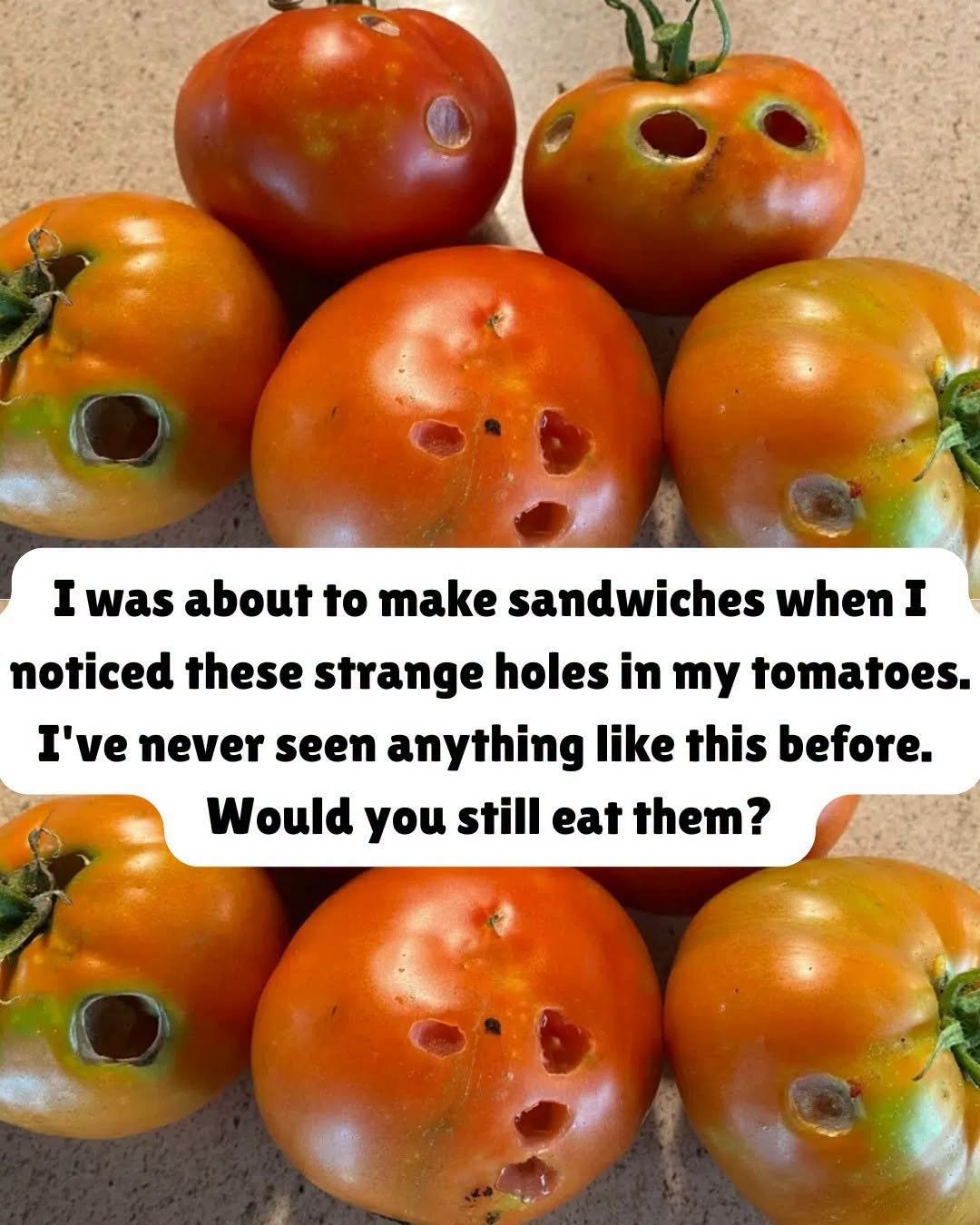
Finding a hole in a freshly picked tomato can be disappointing, but it doesn’t always mean the entire fruit needs to be thrown away. Understanding the cause of the damage can help gardeners protect future harvests and determine whether the tomato is still usable. In many cases,
holes are caused by pests such as tomato hornworms, stink bugs, beetles, or other insects that feed on ripening fruit. Birds and squirrels can also leave their mark, with birds typically pecking small openings and squirrels taking larger bites as they search for food and moisture.
Not all holes are caused by animals or insects. Some tomatoes develop scars or irregular openings due to growing conditions. Problems such as blossom end rot, which is linked to calcium imbalance and inconsistent watering, can create damaged areas that later attract pests.
Another condition known as catfacing occurs when temperature fluctuations or environmental stress affect flowers during development, resulting in misshapen fruit with cracks or scars. Although these conditions may affect appearance, they do not always make the tomato unsafe to eat.
Whether a damaged tomato can still be used depends on the extent of the problem. If the affected area is small and there are no signs of mold, insects, unpleasant odors, or soft spots, the damaged portion can usually be cut away while the remaining fruit is safely consumed.
However, tomatoes with extensive damage, visible mold, or signs of decay should be discarded to avoid the risk of foodborne illness. When in doubt, it is always safer to throw away questionable produce rather than take unnecessary risks.
Preventing holes in tomatoes begins with good garden management. Regularly inspecting plants for pests, maintaining consistent watering, and removing damaged fruit promptly can help reduce future problems. Covering plants with bird netting or lightweight fabric may protect ripening tomatoes from birds and squirrels without harming wildlife.
Companion plants such as basil, marigolds, and garlic can also discourage certain insects while promoting a healthier garden environment. Keeping the area free of weeds, fallen fruit, and debris further reduces the likelihood of infestations. With proper care and early intervention, gardeners can enjoy healthier plants and a more productive harvest throughout the growing season.