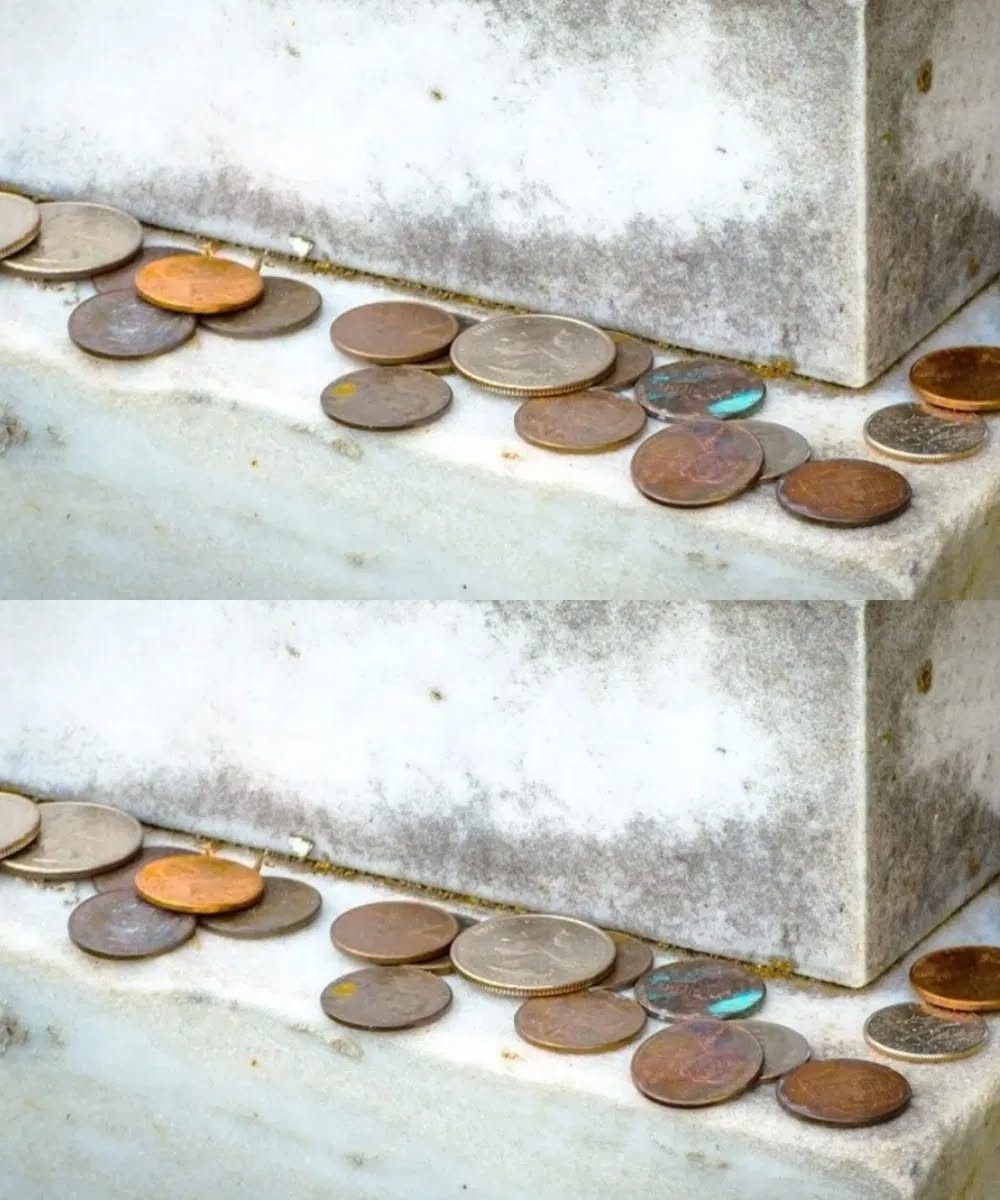
Have you ever walked through a cemetery and noticed a small coin resting on a gravestone? At first glance, it might seem accidental, as if someone simply dropped spare change. In many military cemeteries, however, the coin is placed there intentionally. It represents a quiet tradition of respect and remembrance, allowing visitors to honor someone’s life and service without the need for words.
The custom is most commonly connected with individuals who served in the U.S. armed forces. Different coins can carry different meanings, almost like a simple symbolic language. A penny is the most frequently seen coin and usually indicates that someone visited the grave and wanted to show that the person is still remembered. For families, discovering a penny left behind can be a comforting reminder that others continue to honor their loved one’s life and contributions.
A nickel often suggests a more personal connection, indicating that the visitor attended basic training with the service member. Those early weeks of training often create strong and lasting bonds. A dime can represent that the visitor served alongside the individual during active duty, sharing responsibilities, experiences, and challenges that strengthened their connection over time.
The quarter is considered to hold the deepest meaning. It may indicate that the visitor was present when the service member passed away, symbolizing a powerful and personal memory of that moment. The tradition became widely recognized during and after the Vietnam era, when many veterans sought meaningful ways to honor those who served beside them. Despite its simplicity, placing a coin on a gravestone carries a powerful message of remembrance, respect, and gratitude that continues to connect people across generations.