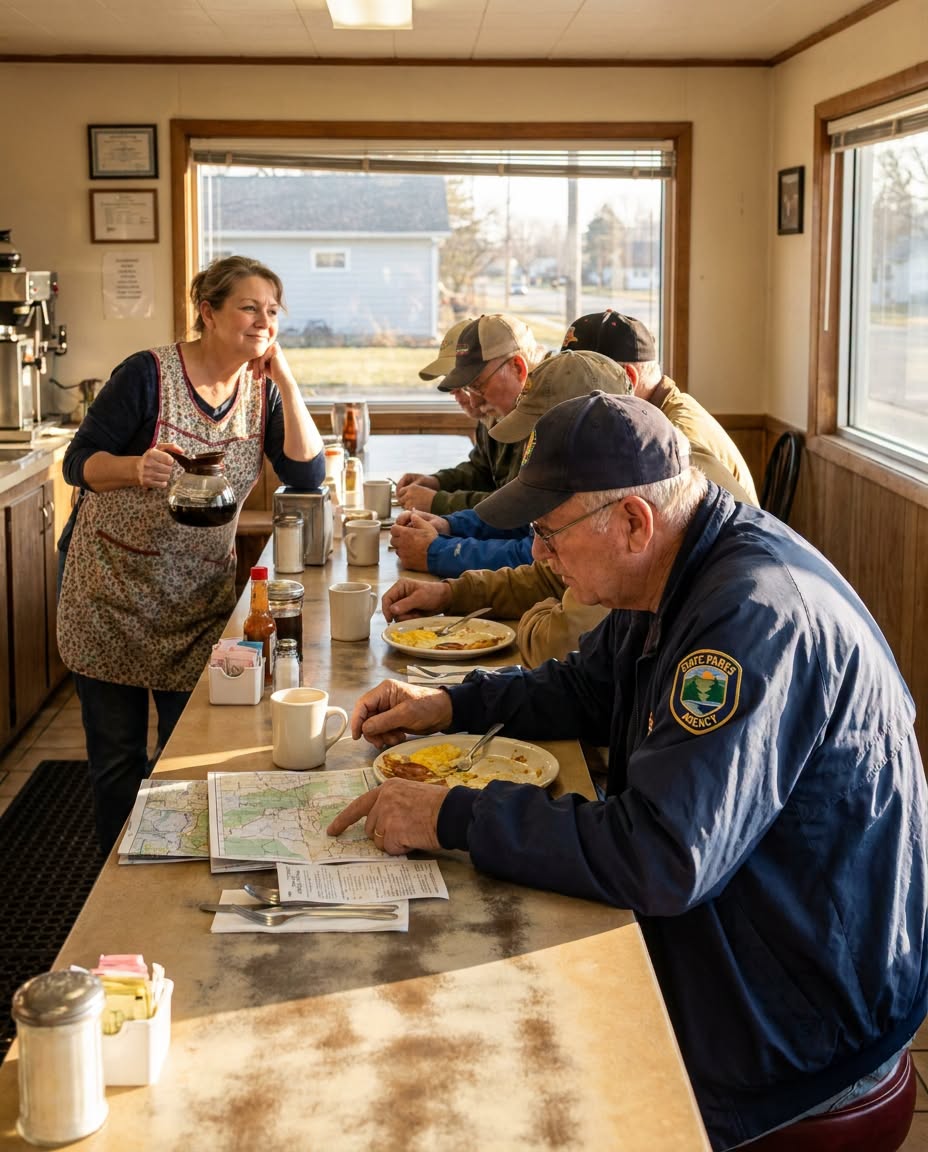
Dorothy had owned and operated Dot’s Diner for more than thirty years, serving the same community and welcoming familiar faces every morning. After her husband passed away, the diner became both
her livelihood and a place filled with cherished memories. One Monday morning, however, her new landlord delivered unexpected news: beginning October 1, the monthly rent would increase dramatically
to a level far beyond what the small business could afford. He explained that the neighborhood was changing and that redevelopment plans were underway, leaving Dorothy uncertain about the future of
the diner she had spent decades building. As she quietly shared the news with several longtime customers seated at the counter, the atmosphere shifted from casual conversation to thoughtful determination as they began reviewing the lease together.
Among the regulars were a retired judge, a former county records employee, a retired fire marshal, and Ellis, a quiet former state building inspector. As they carefully examined the lease and related
documents, Ellis noticed language stating that a significant rent increase depended on specific building renovation requirements. Over the following weeks, the group reviewed publicly available records,
permit filings, and property documentation. Their combined experience led them to identify several inconsistencies involving the renovation application, including questions about the contractor information and whether the proposed work matched the building’s actual condition.
Ellis also remembered conducting an inspection of the property many years earlier and located records indicating that certain structural repairs had been attached to the property as continuing maintenance obligations for future owners.
The discovery prompted the appropriate agencies to review the property records and confirm whether all required obligations had been fulfilled. During that process, officials determined that unresolved
structural requirements remained associated with the building and needed to be addressed before additional renovation plans could move forward. When the landlord returned expecting to proceed with
plans for the property, he instead met with inspectors reviewing the building’s compliance status. Faced with the updated information and legal requirements, discussions shifted from redevelopment to
resolving the outstanding maintenance issues. Rather than continuing the dispute, both sides entered constructive negotiations that resulted in a new long-term lease for Dot’s Diner at a sustainable rental rate, while licensed contractors completed the necessary repairs to improve the safety of the building.
Today, the diner continues serving breakfast just as it has for decades, with the same welcoming atmosphere and familiar customers gathering each morning. The four longtime regulars have become
affectionately known throughout the neighborhood as “The Department” because of the knowledge and experience they willingly share with others facing similar questions about leases, permits, and property
matters. Dorothy often reflects that what seemed like ordinary customer relationships became one of the greatest sources of support during a difficult time. Her experience serves as a reminder that lasting
relationships, mutual kindness, and a strong sense of community can make an extraordinary difference when unexpected challenges arise, proving that the value of helping others often returns when it is needed most.