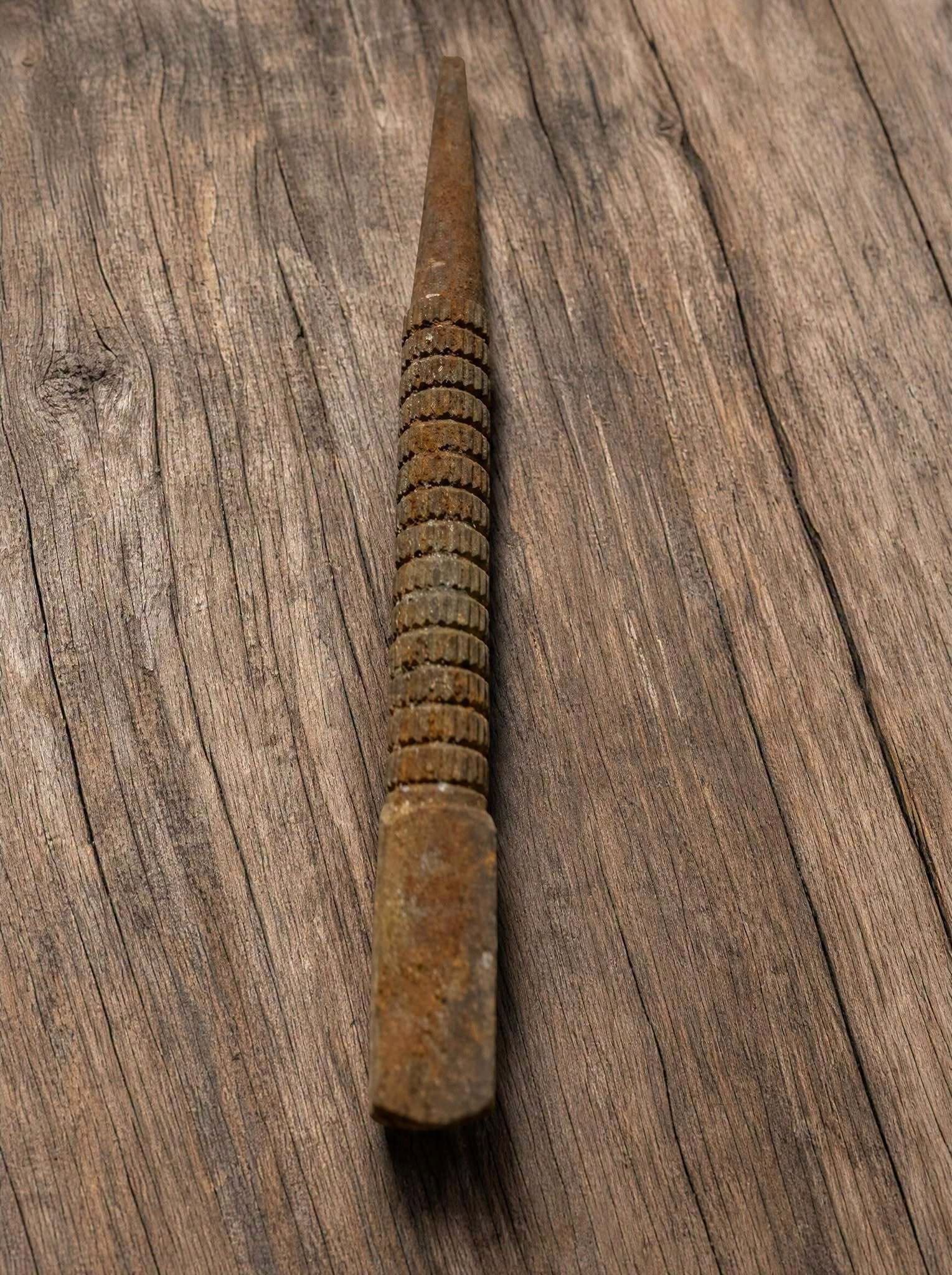
The sound came first—the sharp tap of metal echoing through a quiet garage. Then a pause, a breath, and a careful second strike that finished the job.
For many, it was a familiar rhythm. Generations watched it happen without realizing that this small, simple tool carried a deeper meaning.
That tool was the nail punch. It didn’t cut, drill, or shape wood. Instead, it handled the final detail—sinking nails just below the surface for a smooth, finished result.
In mid-century garages, it was essential. While larger tools did the heavy work, the nail punch ensured everything looked clean and felt right to the touch.
Its worn surface told stories. Shelves were built, toys repaired, doors fixed instead of replaced. Each mark on the tool reflected years of careful work.
More than function, it represented patience. It taught that good craftsmanship isn’t rushed. The final step, though small, often mattered the most.
Today, finding one in an old toolbox feels different. It carries memories—steady hands guiding younger ones, quiet lessons passed down without words.
The nail punch remains a symbol of something lasting. Even now, it reminds us that true quality lives in the small details—the ones people may not see, but will always feel.