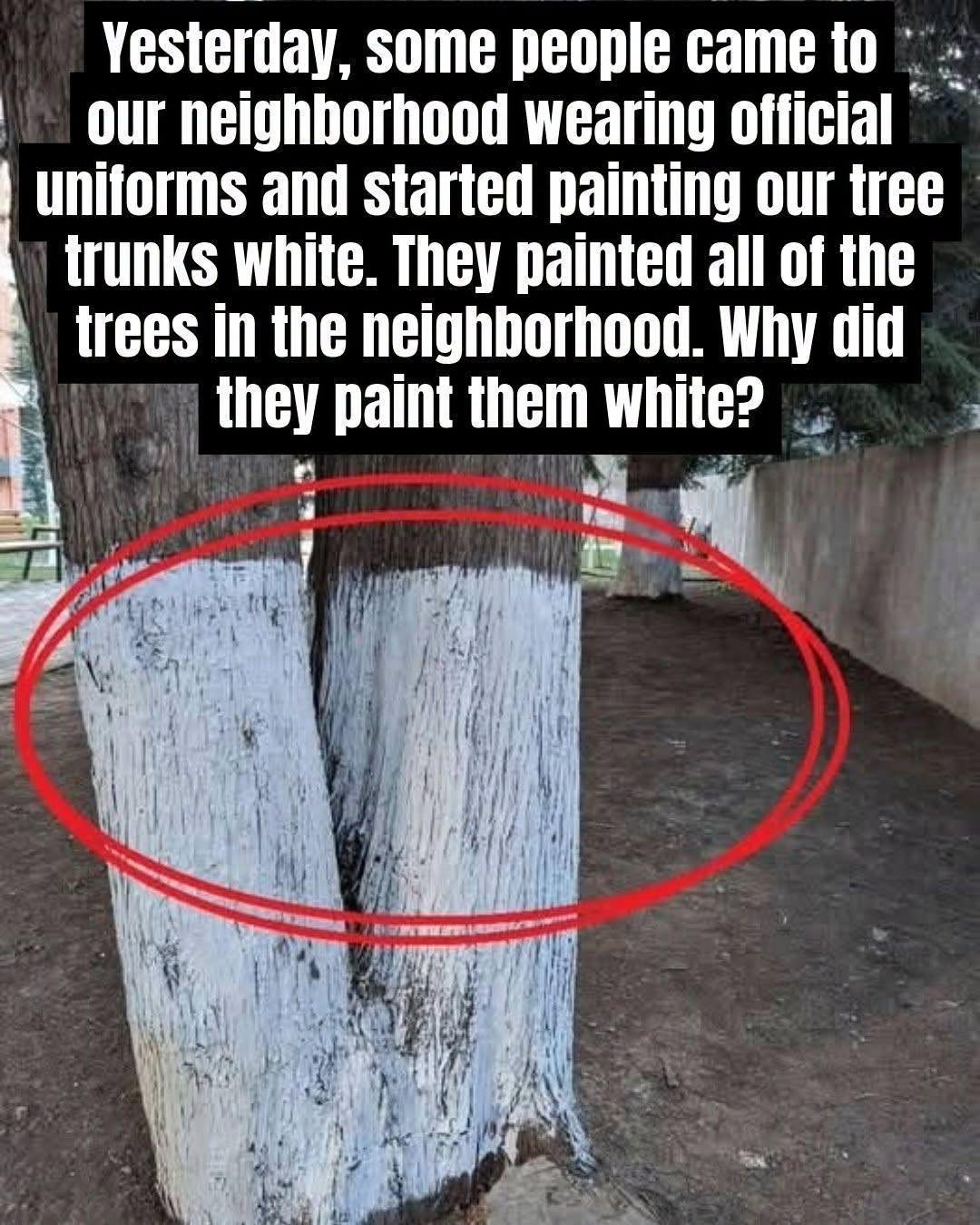
The first time you notice it, it feels strange. Why are so many tree trunks painted white, standing in neat rows along roadsides and fields?
It doesn’t look natural—and it definitely isn’t decoration. It’s a quiet signal of protection against a hidden threat.
Those pale trunks are there to defend trees from a condition called sunscald. During winter, sunlight can warm one side of a tree’s bark while the rest remains frozen.
When temperatures suddenly drop at night, that warmed section cools too quickly, causing the bark to crack.
These splits can weaken the tree, invite disease, and sometimes lead to long-term damage or even death—especially in young or newly planted trees.
The white coating, usually a diluted latex paint, acts like a shield. It reflects sunlight instead of absorbing it,
helping keep the bark at a more stable temperature throughout the day and night. By reducing those extreme swings, the tree is far less likely to suffer damage.
In a way, it works like sunscreen for trees—simple, inexpensive, and highly effective. Farmers, gardeners,
and city planners use it to protect vulnerable trees during harsh seasons, giving them a better chance to grow strong and healthy.
So the next time you pass by a line of white-painted trunks, you’re not looking at something random or decorative.
You’re seeing a small but powerful act of care—one that helps trees survive conditions they can’t defend themselves against.