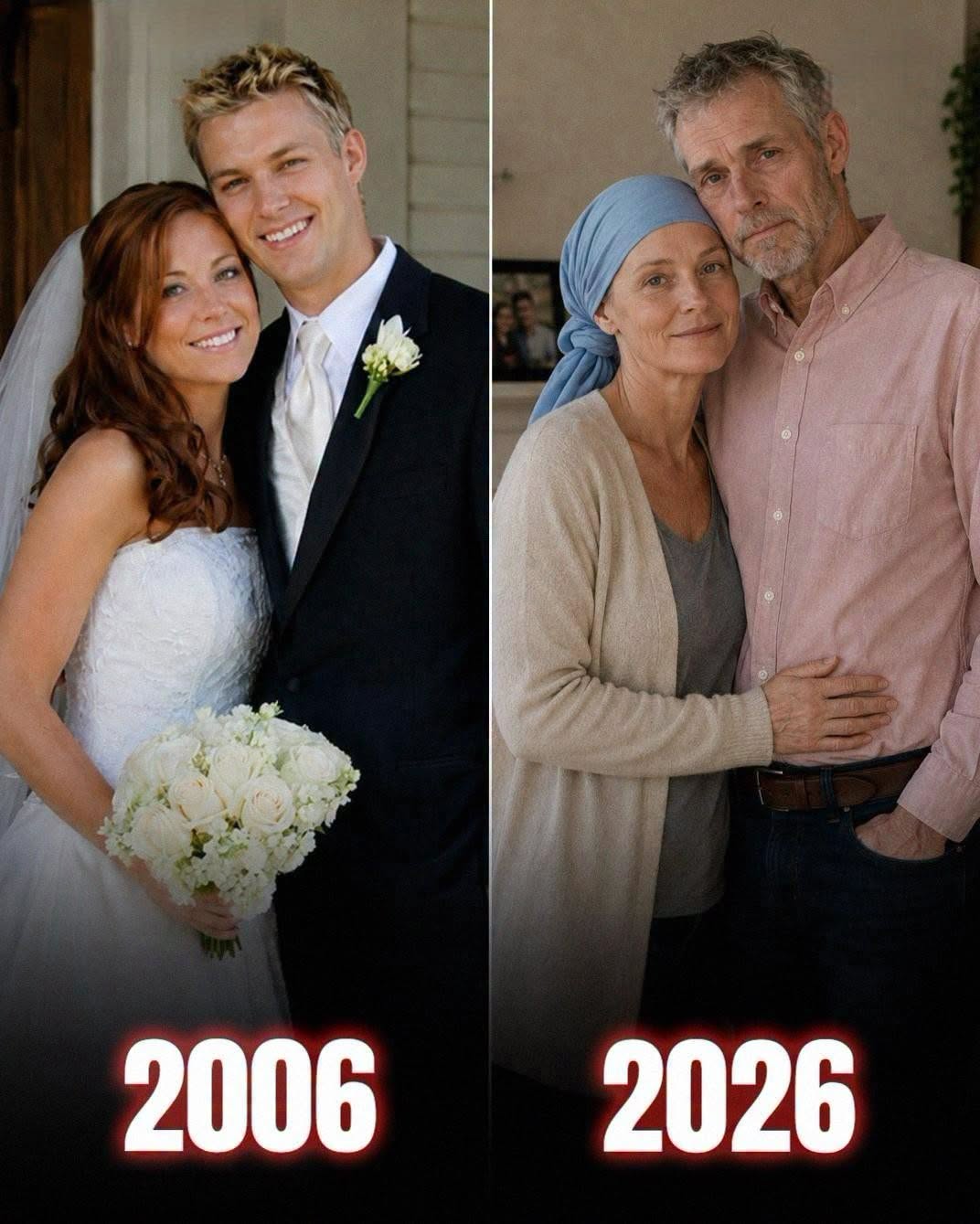
For twenty years, I had imagined our anniversary trip as something special. My husband, Daniel, and I had experienced plenty of ordinary days together—busy mornings, family responsibilities,
unexpected expenses, and the countless small routines that make up a marriage. When our twentieth anniversary finally arrived, we decided to take a short trip and spend a few quiet days away from home.
I thought it would be an opportunity to reconnect, remember the years we had shared, and enjoy each other’s company without the usual distractions.
The first day went better than I expected. We walked through the town, stopped at a small café, took pictures, and talked about memories from when we were younger. Daniel seemed relaxed,
although I noticed that he occasionally became quiet and distracted. I assumed he was simply tired from traveling. That evening, after dinner, we returned to the hotel. I expected us to settle
in and talk about the plans for the following morning. Instead, Daniel surprised me by saying that he had arranged for himself to sleep in a separate room.
I was stunned. After twenty years of marriage, hearing my husband say that on our anniversary felt deeply upsetting. I immediately wondered whether something was wrong between us.
Had I missed a problem? Was he unhappy with our marriage? Had he been keeping something from me? My mind filled with questions before I had even given him the opportunity to explain.
I asked why he had made the arrangement, but he only said that he needed some privacy and that he would explain later.
That answer made the situation even harder. I spent much of the evening sitting quietly in our room, trying not to make assumptions. Still, emotions were difficult to control. I remembered all the challenges
we had overcome together and wondered how our anniversary could suddenly feel so different from what I had imagined. Eventually, I started crying—not because I knew something terrible had happened,
but because I felt confused, rejected, and afraid that the relationship I valued so much was changing without my understanding it.
The next morning, Daniel came back to our room with a small envelope in his hand. He sat beside me and apologized for the way he had handled everything. Then he explained that his separate room had nothing to do with another person or with wanting to distance himself from me. For months, he had been dealing privately with severe anxiety and difficulty sleeping. He had been embarrassed to talk about it because he did not want our anniversary trip to become a discussion about his worries. He had arranged the second room because he was afraid his restless nights would disturb me and wanted to give himself a quiet place where he could manage his sleep without making me feel responsible for it.
I was surprised by the explanation. I had spent hours imagining the worst possible reasons, while Daniel had been trying, however imperfectly, to deal with something he had not known how to discuss. He admitted that keeping the situation from me had been a mistake. He should have trusted me enough to explain what he was experiencing instead of giving me a vague answer and leaving me to fill in the blanks.
His explanation did not instantly erase the hurt I had felt, but it changed how I understood the situation. We talked for several hours about communication, stress, expectations, and the ways both of us had sometimes tried to protect the other by keeping difficult feelings to ourselves. We realized that avoiding uncomfortable conversations did not actually protect our relationship. In many cases, it simply created uncertainty.
Later that day, we decided not to let the misunderstanding define our anniversary. We took a long walk, found a quiet restaurant, and talked about the things we still appreciated about our life together. We also agreed that if either of us was struggling, we would try to speak honestly instead of expecting the other person to guess what was happening.
Looking back, I still wish Daniel had explained everything immediately. The separate hotel room had frightened me because I interpreted it through my own fears rather than through the facts. At the same time, I learned something important about long-term relationships: even people who have known each other for decades cannot always know what is happening inside the other person’s mind.
That anniversary did not become memorable because everything went perfectly. It became memorable because a confusing moment forced us to have a conversation we had probably needed for a long time. I learned that silence can create stories that are far more painful than reality, while honesty can give people the opportunity to understand one another.
Twenty years together had taught us that marriage is not about avoiding every misunderstanding. It is about being willing to talk through them, listen carefully, admit mistakes, and give each other room to explain what cannot always be seen from the outside. Sometimes the truth is not the dramatic explanation we fear. Sometimes it is simply a reminder that the person beside us may be carrying a private struggle we know nothing about.
And sometimes, the most meaningful anniversary gift is not a perfect vacation or an expensive celebration. It is the decision to sit down, tell the truth, listen without judgment, and choose understanding when misunderstanding would be easier.