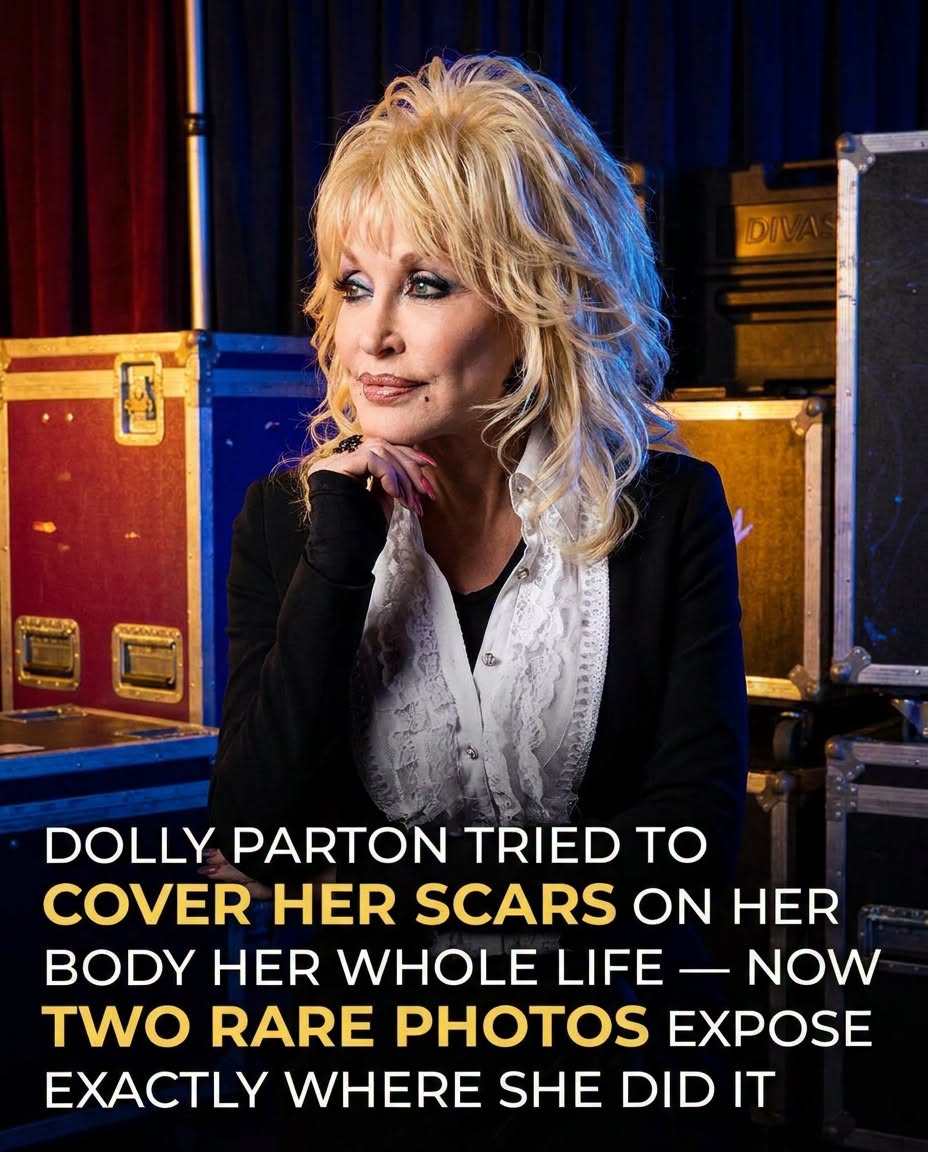
At first glance, photographs of Dolly Parton from the red carpet appear completely familiar: bright outfits, carefully styled hair, sparkling jewelry, and her famous smile. However, some images reveal small details that sparked years of curiosity about whether she had tattoos. A 2006 reunion with Jane Fonda and Lily Tomlin appeared to show faint body art near Parton’s upper arm and shoulder. Another photograph from the 2012 premiere of “Joyful Noise” captured a small pinkish-red mark near the neckline of her white jacket. The marks were subtle, but they encouraged long-running rumors that Parton had kept several tattoos hidden beneath her signature long sleeves.
Speculation grew because Parton rarely showed much of her arms or shoulders publicly. In 2011, Roseanne Barr added to the mystery by describing Parton’s tattoos as colorful, pastel, and decorated with bows rather than traditional dark designs. Fans became fascinated by the possibility of hidden artwork, and even parts of her clothing were sometimes mistaken for exposed skin with tattoos. When Parton eventually addressed the subject herself, she explained that she did have several tattoos, but they were generally tasteful, delicate, and soft in color. Her explanation revealed that the tattoos were connected to something much more practical and personal than celebrity fashion.
Parton said many of the tattoos were created to cover scars left by surgeries and medical procedures. Because her fair skin could develop noticeable scar tissue, she sometimes chose to transform those marks into decorative designs. One especially personal example involved a small indentation left after a feeding tube. Rather than leaving the mark untouched, she turned it into a tiny beehive tattoo featuring a bee. She also mentioned designs such as butterflies, ribbons, bows, and flowers. For Parton, the tattoos were not about rebellion or creating a new image. They represented a way to transform reminders of difficult experiences into something colorful and beautiful.
Parton also explained that she never wanted to make a spectacle of her tattoos. She preferred keeping personal details private and avoided encouraging exaggerated stories about her appearance. Butterflies became particularly meaningful to her because she associated them with beauty, freedom, and gentleness. Looking back at the old photographs, the small glimpses of body art therefore seem less like clues to a dramatic secret and more like brief views of something she intentionally kept personal. The tattoos did not reveal a completely different Dolly Parton. Instead, they reflected her familiar ability to approach difficult experiences with creativity, humor, and optimism. She simply found a way to make some scars more beautiful and chose to share that story on her own terms.