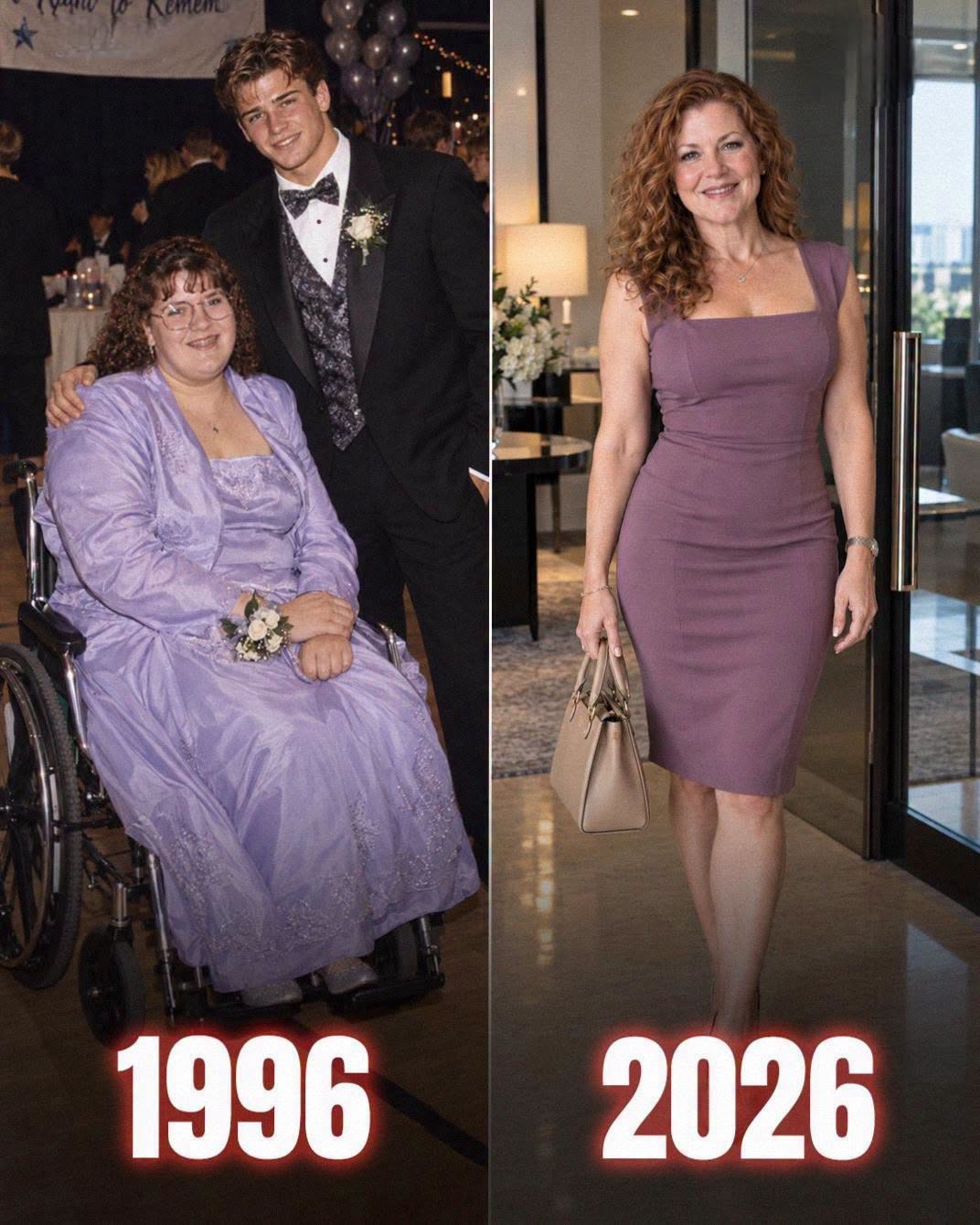
Six months after an accident left me using a wheelchair, I nearly skipped prom because I feared being stared at or treated differently. My mother encouraged me to go, reminding me that I deserved one special night. At the dance, I stayed near the edge of the room until Marcus approached and asked me to dance. When I told him I could not, he simply said, “Then we’ll figure out what dancing looks like.” He joined me, making the moment feel natural and reminding me that I was still a teenager who deserved to have fun.
After graduation, my family moved away, and Marcus and I lost contact. Recovery took years, but eventually I studied design and became interested in creating welcoming, accessible public spaces. I later established my own architecture firm and began working on projects focused on accessibility. Nearly thirty years after prom, I unexpectedly recognized Marcus at a café. He initially did not recognize me, but when I reminded him about the girl in the wheelchair he had danced with, he immediately remembered.
We began talking again and discovered that Marcus had faced difficult experiences of his own. I invited him to join one of my projects as a paid community consultant. While working on an adaptive recreation center, he explained that a building could be technically accessible while still making people feel unwelcome. His perspective became valuable, and he eventually took a regular role, mentoring young people adjusting to physical changes and helping improve accessibility projects.
One day, I found an old photograph from prom showing us laughing together. Marcus admitted he had tried to find me after graduation and had often wondered how I was doing. Over time, our friendship grew into a relationship. At the opening of the new community center, music played in the hall, and Marcus approached me with his hand extended. “Would you like to dance?” he asked. I smiled and joined him, knowing that after thirty years, we still remembered exactly how.