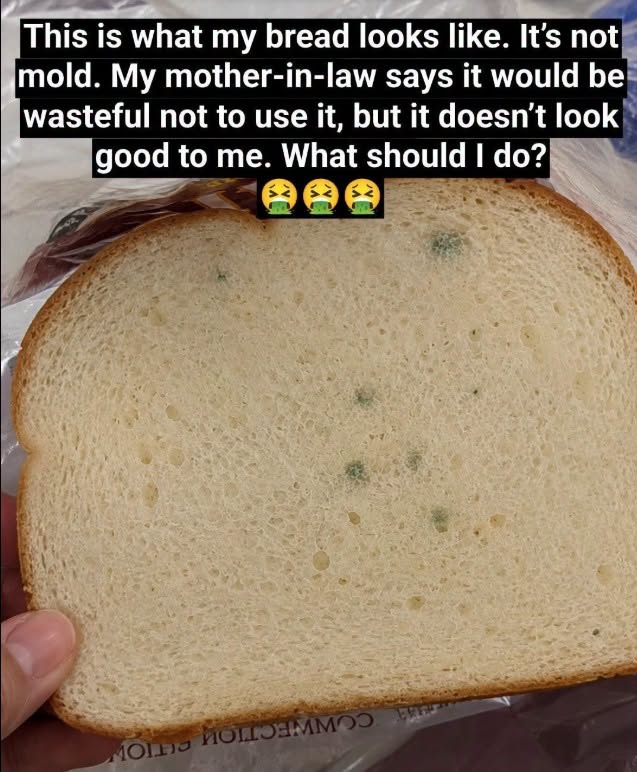
Finding a loaf of bread that has become hard, dry, or less pleasant to eat does not automatically mean it belongs in the trash. Bread naturally changes over time, with staling being one of the most noticeable effects. As the bread ages, changes in its starches make the soft interior firmer and alter the crust. This can leave the bread dry, chewy, or harder than when it was fresh.
Stale bread is mainly a texture problem, not necessarily a sign of spoilage. However, it is important to distinguish staleness from mold. Mold may appear as fuzzy or discolored patches, including green, white, blue, or black growth. Because bread is porous, mold can spread beyond the visible area. Therefore, when mold appears, the safest option is to discard the entire loaf instead of cutting away the affected section.
Unusual smells, such as musty, sour, or unpleasant odors, can also indicate that bread should not be eaten. If the bread is excessively moist, has an unexpected texture, or shows other signs of deterioration, it is better to throw it away. If it is simply stale and otherwise normal, it can be repurposed. Cut it into cubes, season with oil and herbs, and bake at 375°F (190°C) for homemade croutons. It can also be dried and processed into breadcrumbs.
Proper storage can help preserve bread for longer. Keep it sealed at room temperature for short-term use, or freeze sliced bread in a well-sealed freezer bag for later. Refrigeration may speed up staling. Ultimately, dry bread is not automatically spoiled, but visible mold, unpleasant odors, or other clear changes should be treated as reasons to discard it. Reusing safe stale bread can reduce food waste.