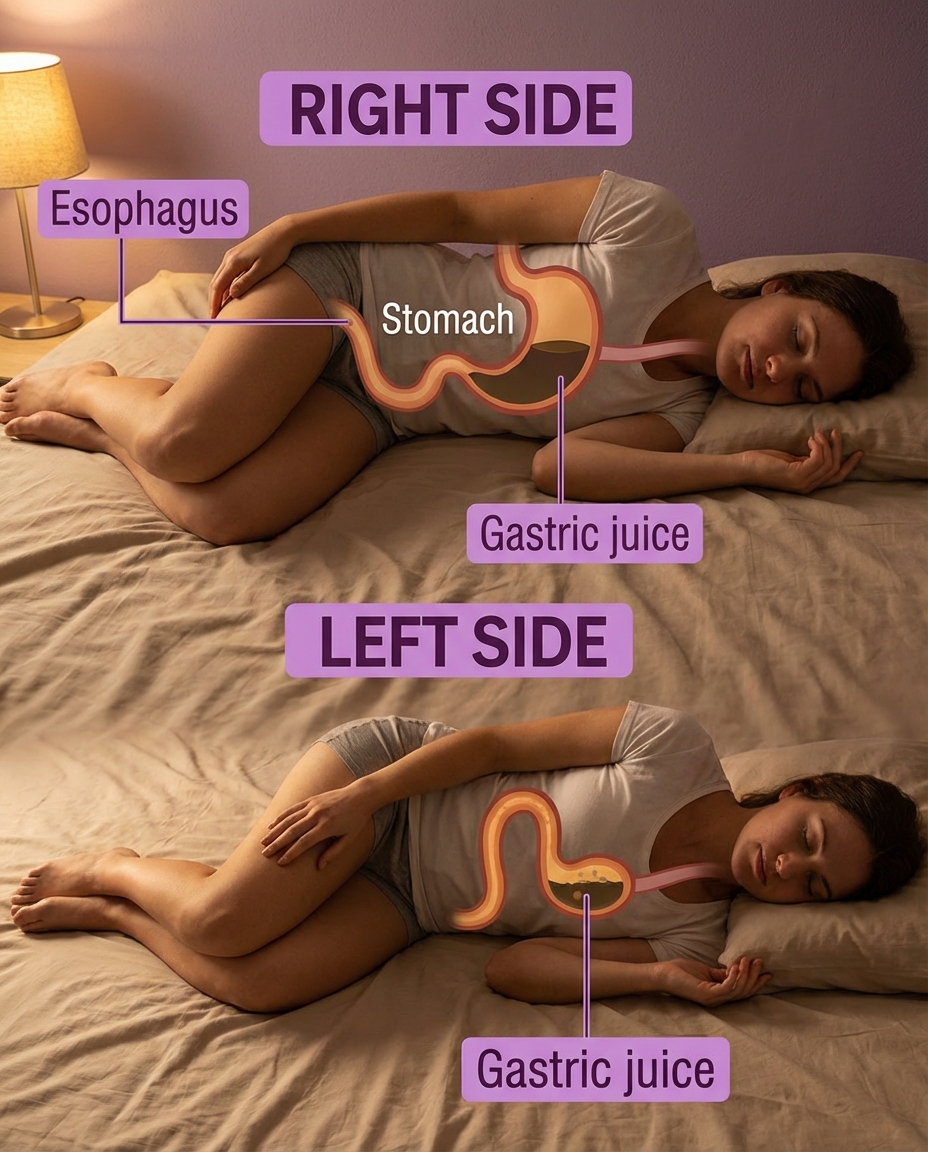
Many people measure sleep quality by hours alone, without considering how sleeping position can influence overall rest. Even during sleep, the body continues important functions like digestion, circulation, and recovery. The position you choose can support these natural processes or make them less efficient. Health professionals often suggest a simple adjustment: sleeping on your left side, which may help improve comfort and support the body’s natural nighttime functions.
One commonly noted benefit of left-side sleeping is its potential to support digestion. Because the stomach is positioned slightly to the left, this posture may help keep stomach contents lower, which can reduce occasional discomfort such as mild heartburn for some individuals. It may also encourage smoother digestive movement, helping to minimize bloating or heaviness that can interfere with restful sleep.
Sleeping on the left side may also assist with circulation and the body’s natural maintenance processes. This position can help reduce pressure on certain blood vessels, allowing blood to flow more efficiently back to the heart. It may also support lymphatic function, which plays a role in maintaining balance within the body. For pregnant individuals, this position is often recommended as it can help improve comfort and reduce pressure on internal organs.
Adapting to a new sleep position can take time, but small adjustments can make the transition easier. Placing a pillow behind your back or between your knees can provide added support and help maintain the position throughout the night. With consistency, many people find fewer interruptions during sleep and feel more refreshed in the morning. While preferences vary, adjusting your sleep posture is a simple and practical way to support overall well-being.