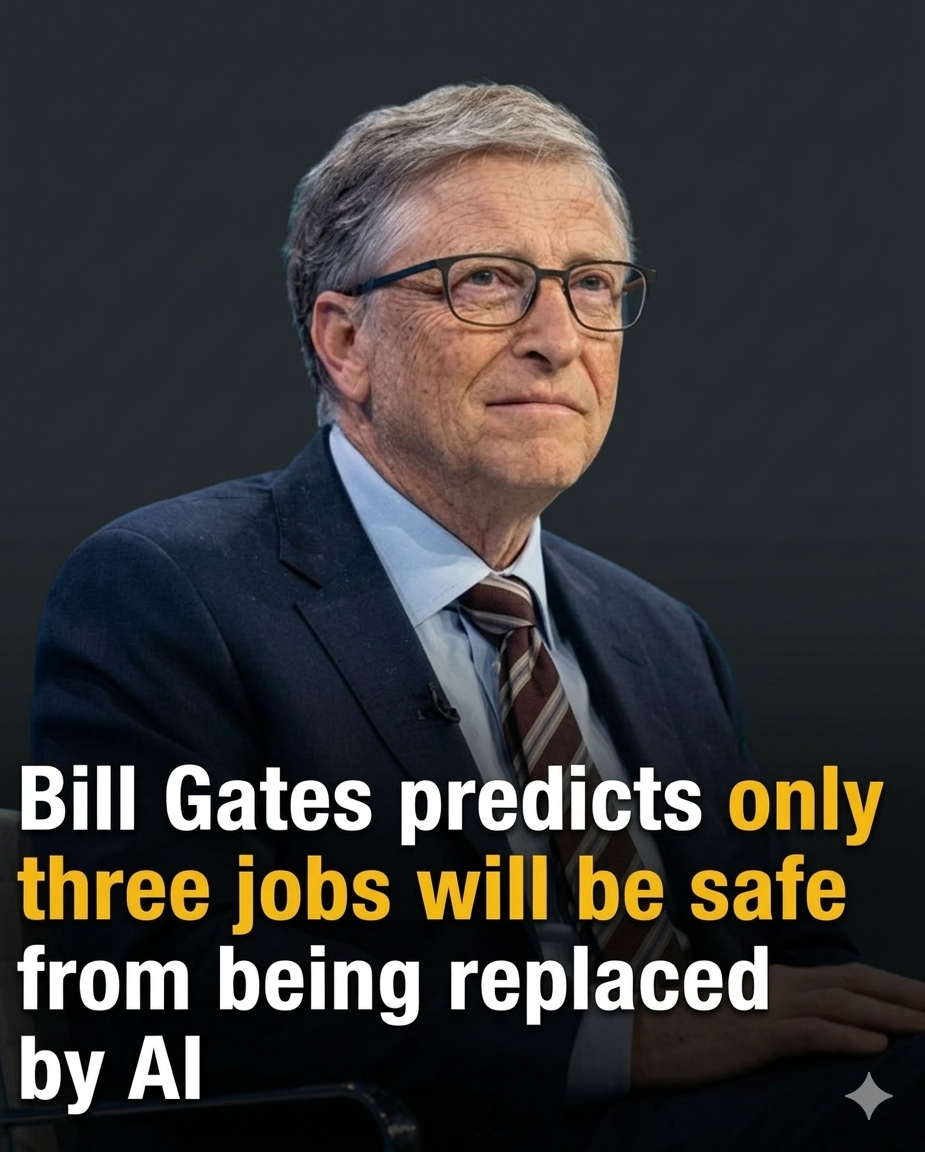
As artificial intelligence (AI) continues to advance, its influence on the future of work is becoming increasingly clear. Technology leaders, including Bill Gates, have noted that AI has the potential to handle many tasks currently performed by humans, reshaping industries and transforming how work is approached. While some roles may become less prominent, many others are expected to evolve, requiring individuals to adapt and collaborate with AI-powered systems.
Gates has also pointed out that expertise in fields such as healthcare and education has traditionally been highly valued due to limited access to specialized knowledge. As AI tools improve, access to information and guidance may become more widely available, helping people perform complex tasks with greater support. This could help expand opportunities and reduce barriers in areas where expertise was once difficult to obtain.
This transformation has been described as the rise of more accessible intelligence, where advanced knowledge can be shared more broadly through technology. While this creates new possibilities, it also introduces challenges for industries and workers adapting to rapid change. As AI becomes more integrated into everyday processes, it is expected to influence how decisions are made and how services are delivered across many sectors.
Rather than replacing human involvement, the future of work will likely focus on collaboration between people and technology. Skills such as creativity, empathy, and critical thinking remain essential and cannot be easily replicated. By embracing continuous learning and adaptability, individuals can continue to play an important role in a world where AI enhances human capabilities and supports new ways of working.