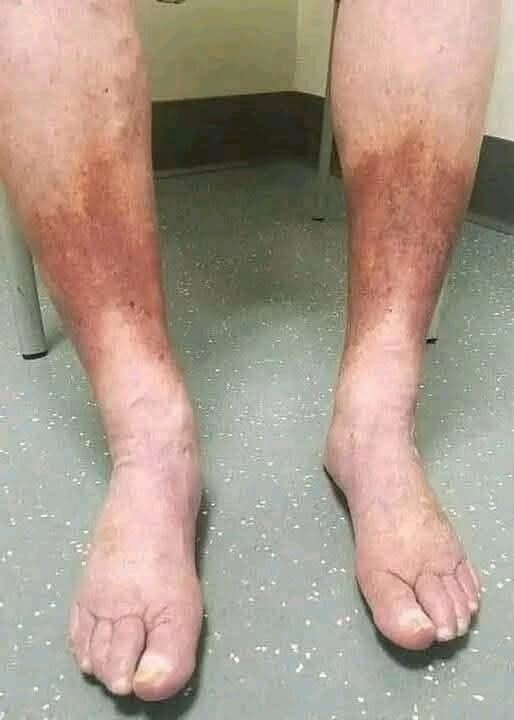
Occasional swelling in the feet and ankles can result from prolonged sitting, standing, traveling, warm weather, or consuming salty foods. It often improves with rest or movement. However, swelling that persists, frequently returns, or appears alongside skin changes may indicate an underlying health concern requiring medical evaluation.
Persistent swelling can sometimes develop when circulation becomes less efficient, allowing fluid to accumulate in the lower legs. This may cause heaviness, tightness, or discomfort. Over time, some individuals notice darker skin around their ankles, dryness, thickening, or unusual firmness. Although these changes do not necessarily indicate a serious condition, they should not be ignored.
The location and timing of swelling provide important clues. Swelling affecting both legs may have different causes from sudden swelling in one leg. Increasing discomfort, redness, warmth, significant pain, or wounds that heal slowly require prompt medical attention. Sudden leg swelling accompanied by chest discomfort, breathing difficulties, fainting, or severe weakness requires emergency medical care.
For mild swelling, regular movement, avoiding prolonged inactivity, and maintaining healthy daily habits may support comfort and circulation. Nevertheless, persistent symptoms should be assessed by a healthcare professional. Recording when swelling begins, how frequently it occurs, and what improves or worsens it can help guide evaluation. Early medical assessment can identify possible causes and appropriate treatment options.