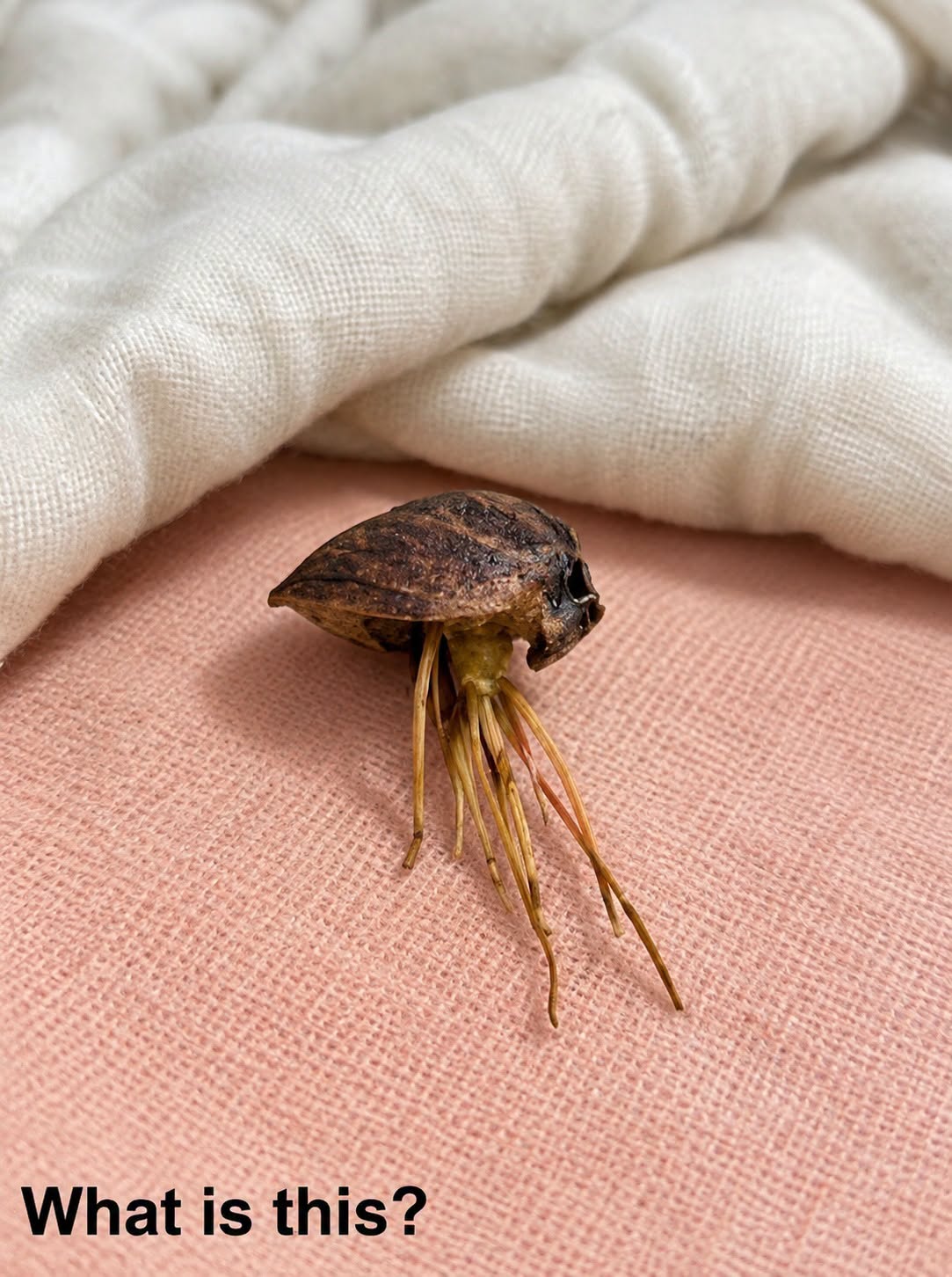
After a tiring day, I pulled back my blanket and discovered a tiny, dark insect with thin legs and an unfamiliar body shape resting on the fabric.
Rather than touching it, I photographed the mysterious visitor. Its unusually large, helmet-shaped upper body prompted me to search online, where treehoppers emerged as a possible identification.
Treehoppers belong to the Membracidae family and are related to leafhoppers. Their enlarged pronotum often resembles thorns, helmets, horns, or vegetation, providing remarkable camouflage within natural surroundings.
These insects feed on plant sap using specialized mouthparts and typically inhabit trees, shrubs, and garden plants rather than mattresses, blankets, or furniture found inside residential homes.
The insect might have entered through windows, doorways, clothing, or bags. Finding one unexpected visitor does not necessarily indicate an infestation, while properly maintained screens reduce encounters.
When discovering unfamiliar insects, avoid direct contact and photograph them safely. Consult reliable identification resources or seek assistance from qualified specialists whenever the insect’s identity remains uncertain.
Apparently harmless insects can sometimes be relocated outdoors using a container and stiff paper. Inspecting bedding and surrounding surfaces before returning to bed is also a sensible precaution.
By morning, my concern had become curiosity about nature’s remarkable diversity. I learned that unfamiliar appearances do not necessarily indicate danger, making careful observation and reliable information valuable.