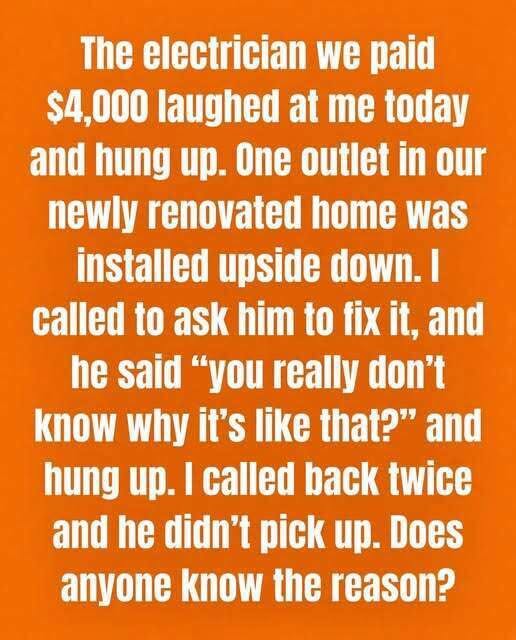
A wall outlet with its ground hole facing upward might initially appear incorrectly installed. However, this unusual orientation is often intentional and connected to its particular function.
One common explanation involves switched outlets, particularly in older homes where wall switches controlled lamps before ceiling lighting became a standard feature throughout most residential living spaces.
In these arrangements, one half of the outlet may respond to a wall switch, while the other remains continuously powered, providing convenient access to electricity for devices.
Some electricians install switched outlets upside down to distinguish them visually from conventional outlets. However, this practice represents an installation convention rather than a mandatory electrical requirement.
National electrical codes generally do not require a specific outlet orientation. Installation preferences may therefore differ depending on regional practices, individual electricians, and decisions made by builders.
An upward-facing ground hole does not necessarily indicate a switched outlet. Sometimes, this positioning simply reflects personal preferences, local construction habits, or the electrician’s preferred installation method.
To determine whether an outlet is switched, plug in a functioning lamp and operate nearby wall switches, observing whether the lamp responds or remains continuously powered instead.
Ultimately, an unusual outlet orientation does not automatically indicate an installation error. It may reflect practical considerations involving convenience, electrical flexibility, or the preferences of the original installer.