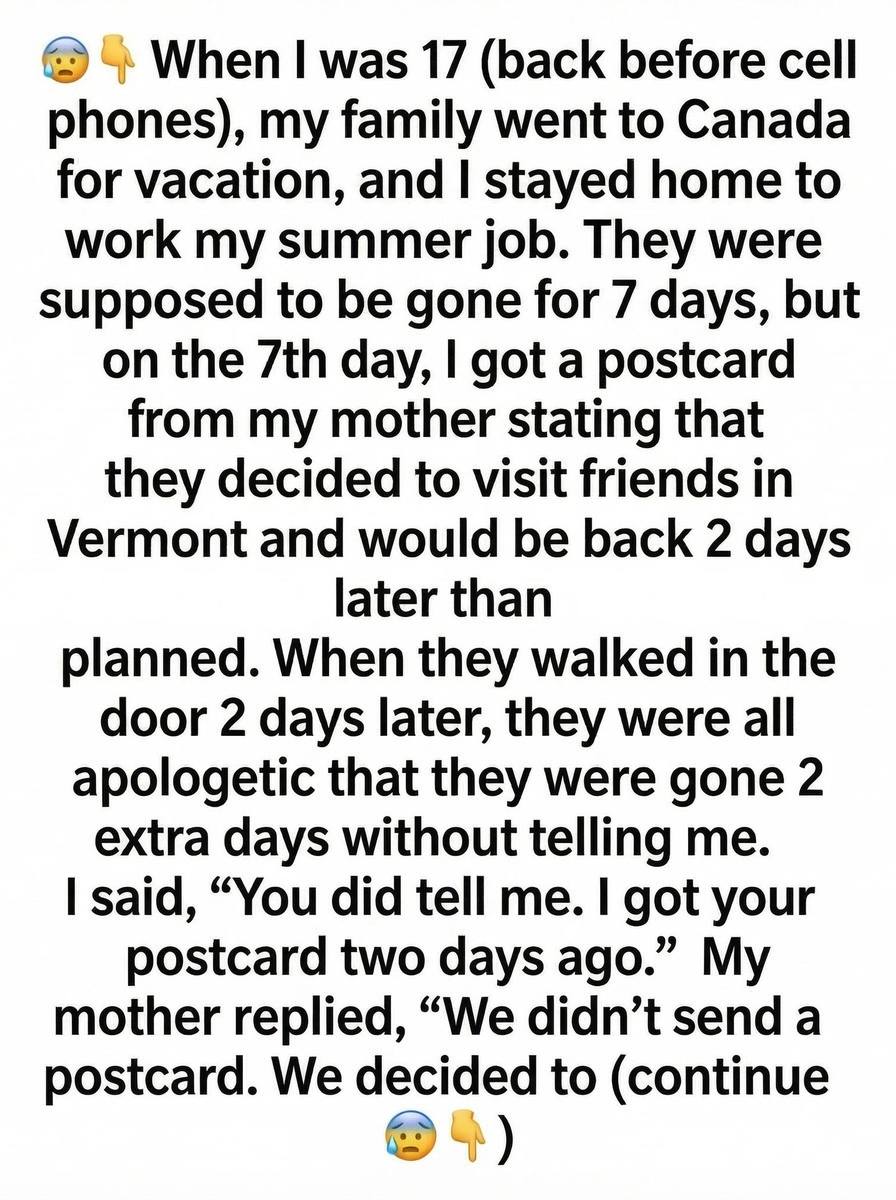
When I was seventeen, my family left for a summer trip to Canada and trusted me to take care of the house. At first, I felt excited about the independence, but the first night made me realize how noticeable silence can be. The rooms felt larger, and time seemed to move more slowly, marked only by the ticking of the clock. I ate alone, rewatched familiar shows, and went to bed early to avoid the stillness.
By the seventh day, the sense of loneliness had grown, making even simple tasks feel more difficult. That afternoon, a postcard came through the mail slot. It was from my mom, filled with cheerful updates and a note saying they had decided to make a short two-day stop in Vermont before returning home. It wasn’t anything unusual—just a small change of plans—but it brought an immediate sense of relief. The house felt more comfortable, and the quiet no longer seemed overwhelming.
Two days later, my family returned, happy and tired from their trip. When I mentioned the postcard, my mom looked at it with confusion and told me she had never sent it. They hadn’t made any stop in Vermont and had traveled directly home from Canada. The handwriting looked accurate, the stamp was valid, and the timing matched—but its origin remained unclear. There were no other unusual messages or signs, only that single postcard arriving at a moment when it was most needed.
It didn’t feel threatening or harmful—rather, it felt reassuring. Over time, I stopped trying to find an explanation. What stayed with me was the perspective it offered: people naturally seek comfort in uncertain moments. Sometimes reassurance comes from clear sources, and sometimes it simply appears when it is needed most. That postcard brought a sense of calm, and even without clear answers, it left a lasting impression about vulnerability, trust, and the importance of finding balance during quiet, uncertain times.