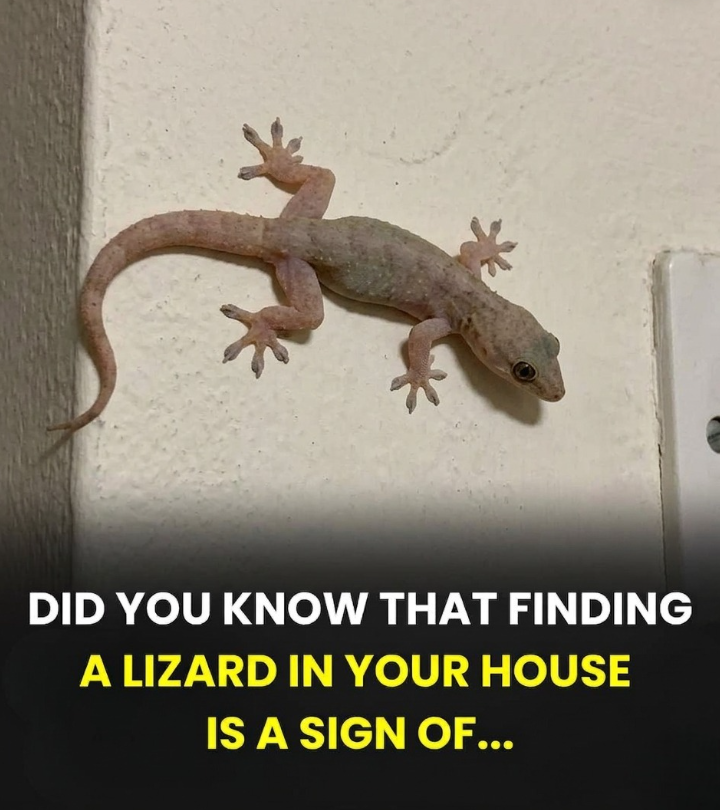
Seeing a lizard enter your home may seem like a simple, everyday occurrence, yet in many cultures and belief systems, it is often associated with deeper meaning. For some, the moment can feel significant, as if it happens at a particular time for a reason. The idea that animals can carry symbolic messages has existed throughout human history, and even a small, quiet creature like a lizard has been given meaning in various traditions.
Rather than being viewed as coincidence, its presence is sometimes interpreted as a sign of awareness, balance, or subtle changes in one’s environment. These interpretations are not fixed and often depend on personal beliefs, cultural background, and the circumstances surrounding the experience. In many parts of Asia, lizards are commonly seen as harmless household creatures that coexist with people and contribute to maintaining a natural balance by reducing insects.
In certain traditions, their presence indoors is linked to ideas of protection and harmony within a space. Some belief systems also place importance on the timing or behavior of the lizard, encouraging attentiveness to surroundings and daily decisions. In Indian cultural interpretations, including those associated with Gauli Shastra, different meanings may be assigned based on where the lizard appears and how it moves, reflecting a long-standing connection between everyday events and symbolic understanding.
In more modern or Western perspectives, the meaning often leans toward themes of adaptability and renewal. The lizard’s natural ability to regrow its tail is commonly viewed as a symbol of resilience and the ability to recover from challenges. While interpretations can vary widely, they continue to hold cultural and symbolic value, ultimately depending on how each individual chooses to understand the experience.