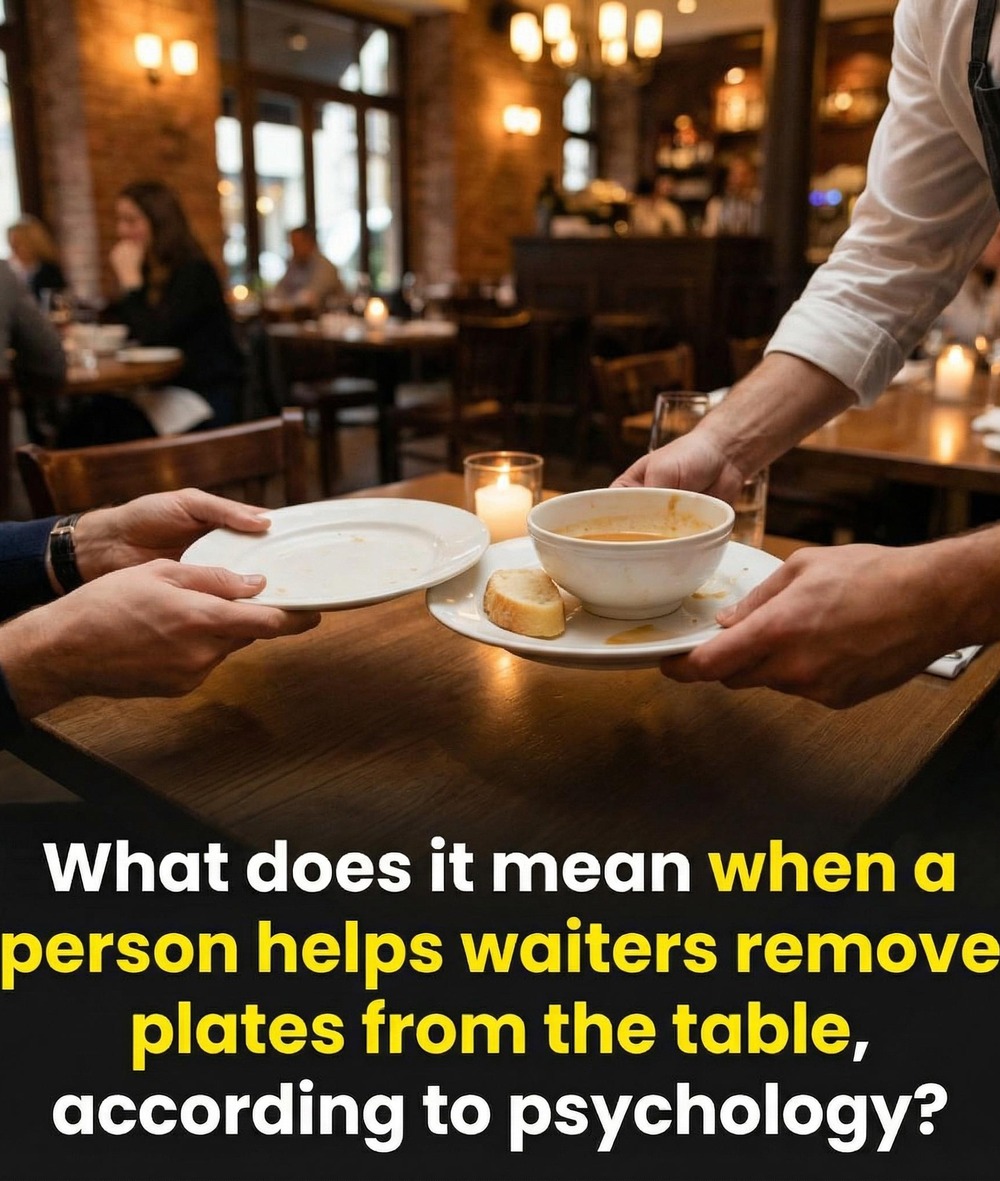
In the busy atmosphere of a restaurant—filled with conversations, clinking dishes, and soft lighting—certain small actions can stand out. One of these is when a diner helps a waiter by handing over a few plates or clearing a small space. Though simple, this gesture often reflects a natural sense of cooperation and consideration. In settings where people usually focus on their own dining experience, those who instinctively assist show awareness of how their actions can ease someone else’s workload. These small choices often signal empathy and a desire to make shared environments more comfortable for everyone.
Experts note that this type of behavior often comes from recognizing the effort involved in service-related work. Many people who lend a hand have either experienced similar roles or simply appreciate the responsibilities that come with them. When diners stack plates or organize items without being asked, the intent isn’t to rush the meal but to show appreciation. Instead of viewing dining as strictly transactional, they see it as a brief interaction where both sides contribute to a positive experience. This mindset aligns with prosocial behavior—thoughtful actions that help others without expecting acknowledgment.
This impulse to help can also reflect comfort in social settings and strong emotional awareness. Individuals who notice subtle cues—a busy waiter, a crowded table, or a tray waiting to be balanced—often respond in a way that feels natural and respectful. Their assistance is gentle rather than intrusive, timed in a way that supports rather than interrupts. Research suggests that people who demonstrate this kind of proactive kindness are often motivated by internal satisfaction. Their actions come from personal values, not a desire for attention, and they show a sense of humility by acknowledging that no task is beneath them.
Of course, not everyone who stays seated is indifferent, and not everyone who helps is trying to send a message. Cultural norms, personal comfort levels, and past experiences all influence how people behave in public spaces. What matters most is intention. When help is offered with genuine courtesy, it can reduce stress, create a more positive atmosphere, and strengthen small moments of connection. In an industry where workers frequently face time pressure and high expectations, a simple gesture of cooperation can serve as a meaningful reminder that kindness often shows itself in the smallest actions.