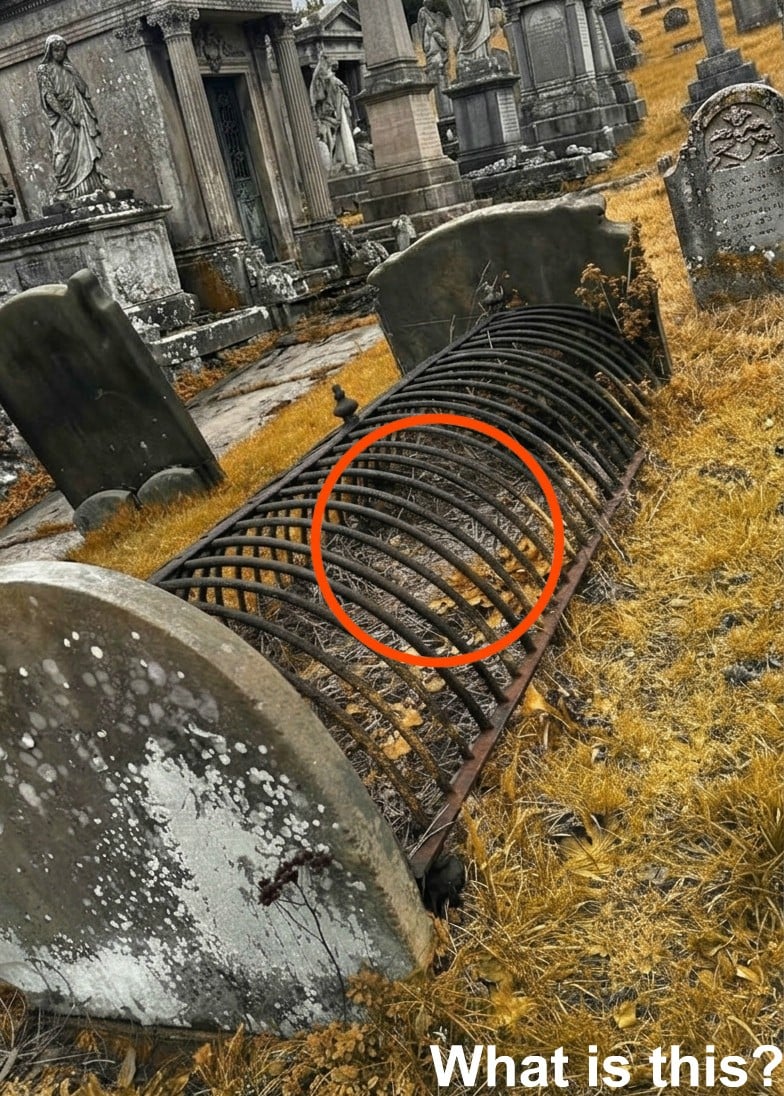
In some historic burial grounds, visitors may notice graves covered by heavy iron structures known as mortsafes. At first glance, these enclosures may seem unusual, but they have a clear historical purpose. During the 18th and 19th centuries in parts of Europe, there was an increased demand for human bodies for medical study, which led to concerns about grave disturbance. Families, already coping with loss, sought ways to protect burial sites, leading to the use of protective measures such as mortsafes.
These structures were typically constructed from strong iron bars and designed to provide security over newly placed graves. They were usually installed for a limited time, remaining in place until natural processes made the remains unsuitable for study. This means that mortsafes were intended as temporary safeguards rather than permanent fixtures, reflecting both emotional concerns and practical challenges of that time.
Over the years, changes in laws and medical practices have addressed the issues that once made these structures necessary. Modern systems, including regulated anatomical study and voluntary body donation programs, have removed the need for such measures. Today, surviving mortsafes are preserved primarily as historical artifacts rather than used for their original purpose.
Seeing one of these structures can encourage reflection on how communities balanced respect for the deceased with the needs of scientific progress. They represent a period when additional precautions were considered necessary and highlight how practices have evolved over time. As historical features, they continue to offer insight into past concerns while connecting them to present-day standards and understanding.