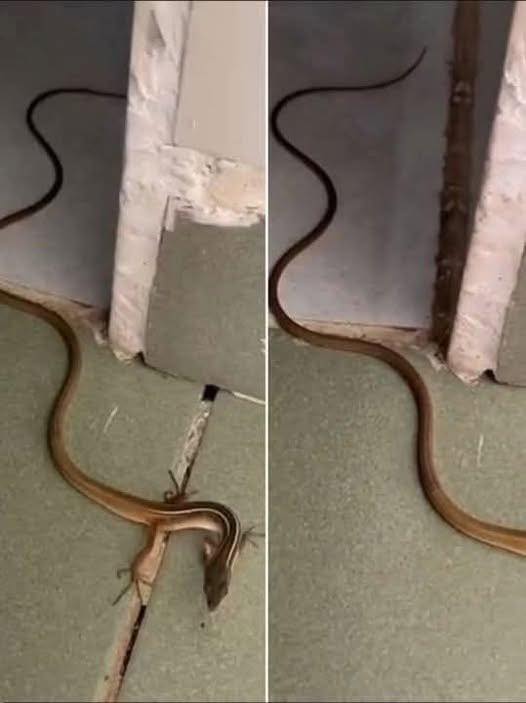
A snake entering a home can be surprising, but in most cases it is not a sign of anything unusual or harmful beyond natural behavior. Snakes typically move indoors while searching for food, warmth, or shelter. Small openings around a house can make it easy for them to get inside, especially during warmer months when they are more active.
Common entry points include cracks in the foundation, gaps under doors, open vents, or poorly sealed windows. If you notice a snake indoors, the most important step is to remain calm. Sudden movements or attempts to handle it can increase risk. Most snakes prefer to avoid people and will try to move away if left undisturbed. For safety, make sure children and pets are kept at a distance.
If possible, close interior doors to limit the snake’s movement and keep it contained in one area. Avoid trying to touch, capture, or harm the snake, as even non-venomous species may react defensively if they feel threatened. Because it can be difficult to identify snake species accurately, seeking professional help is the safest approach.
Contacting animal control or a licensed wildlife removal service is the best course of action. After the situation is handled, inspect your home for entry points and seal any gaps. Maintaining your surroundings—such as trimming vegetation, reducing clutter, and managing pests—can help prevent future encounters. While unexpected, situations like this can usually be resolved safely with the right precautions and support.