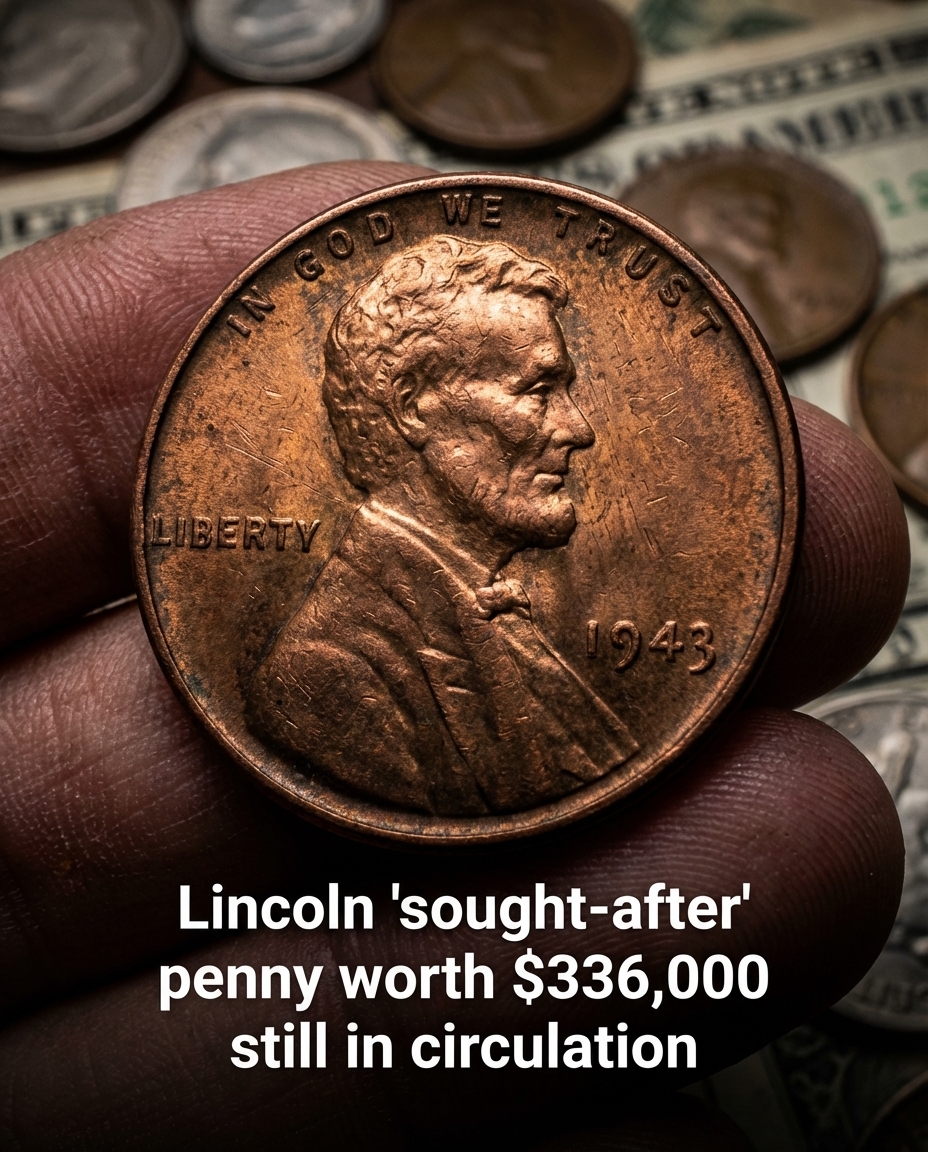
It’s easy to overlook loose change, but in rare cases, a single coin can hold unexpected historical and collector value. One of the most well-known examples is the 1943 bronze Lincoln cent, a coin that has attracted strong interest from collectors due to its rarity and unusual origin.
During World War II, copper was reserved for wartime manufacturing, so the U.S. Mint produced pennies in 1943 using zinc-coated steel instead of the usual bronze composition. However, a small number of leftover bronze blanks from the previous year were mistakenly used during production. This resulted in a very limited number of bronze pennies entering circulation alongside the standard steel versions.
These rare coins were later identified and confirmed by collectors and experts, leading to significant attention in the numismatic community. Because of their scarcity—only a small number are known to exist—their value has increased substantially over time. Verified examples have sold for very high prices at auctions, depending on condition and authenticity.
For those interested in examining their own coins, there are simple indicators to consider. A genuine 1943 bronze penny will not be attracted to a magnet, unlike the common steel version, and it typically has a warmer, copper-like appearance. While discovering one is extremely unlikely, the possibility continues to make it a point of interest for collectors and anyone who enjoys checking their spare change more carefully.