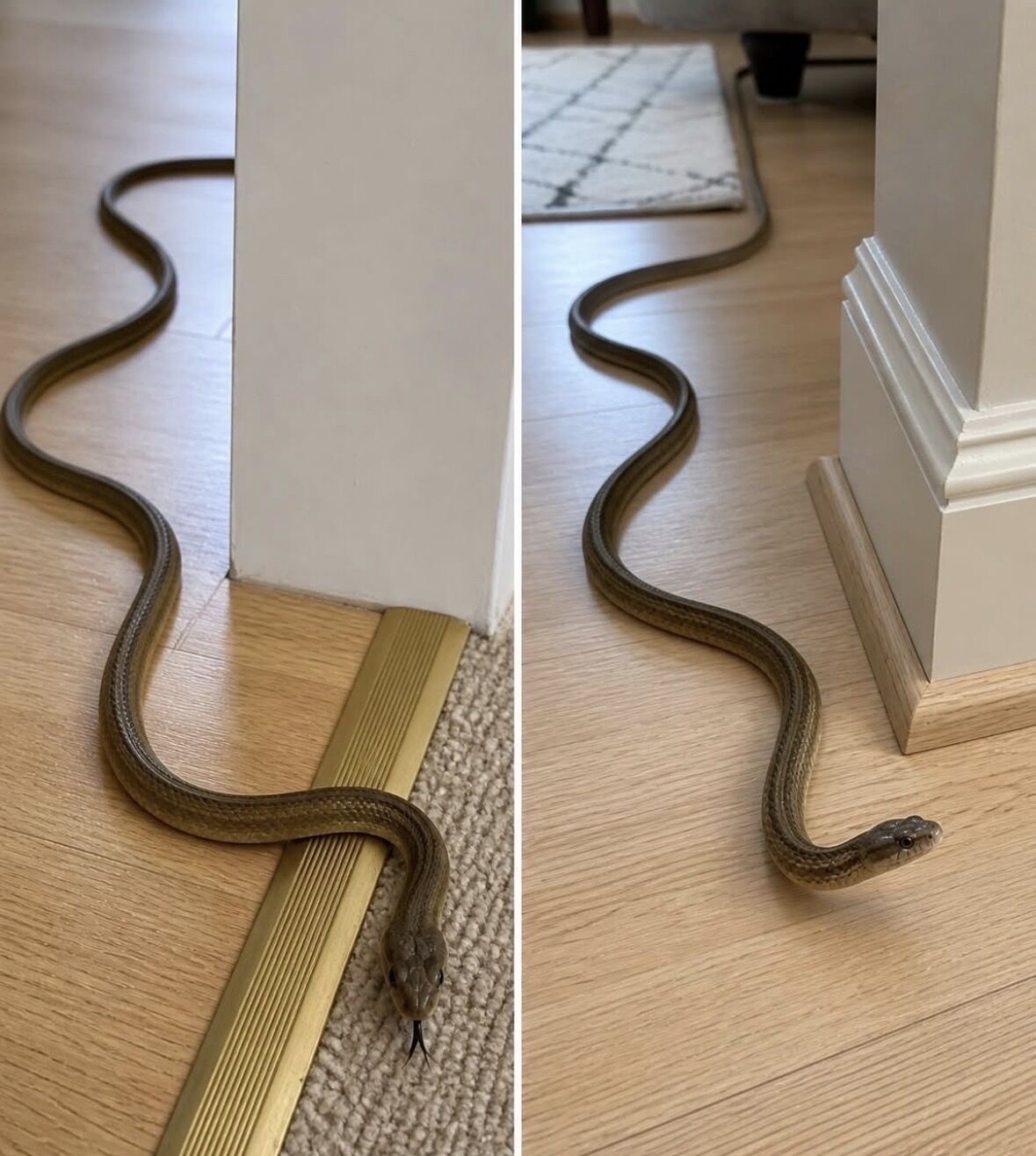
A snake entering a home can feel alarming, but in most situations it is not symbolic or unusual. It is typically a practical response to environmental conditions such as the search for food, warmth, or shelter. Snakes may enter buildings through small openings that are easy to overlook, especially when they are active during warmer seasons.
Common entry points include cracks in foundations, gaps under doors, open vents, or poorly sealed windows. If a snake is found indoors, the most important step is to remain calm and avoid sudden movements. Snakes usually avoid human contact and will try to leave if they are not threatened. For safety, it is recommended to keep children and pets away from the area immediately.
If possible, interior doors can be closed to gently contain the snake within a single room without provoking it further. This reduces the chance of it moving deeper into the home. It is important not to attempt to touch, capture, or remove the snake, as even non-venomous species may bite when they feel threatened. Because identifying species correctly can be difficult, professional assistance is the safest option.
The most reliable response is to contact animal control or a licensed wildlife removal service, as trained professionals can safely handle and relocate the animal. After removal, it is advisable to inspect the home for potential entry points and seal any gaps or openings. Maintaining the surrounding area by reducing clutter, trimming vegetation, and controlling pests can also help prevent future occurrences. Although the experience may be unsettling, snakes generally enter homes by accident, and with proper precautions, the situation can be managed safely and effectively.