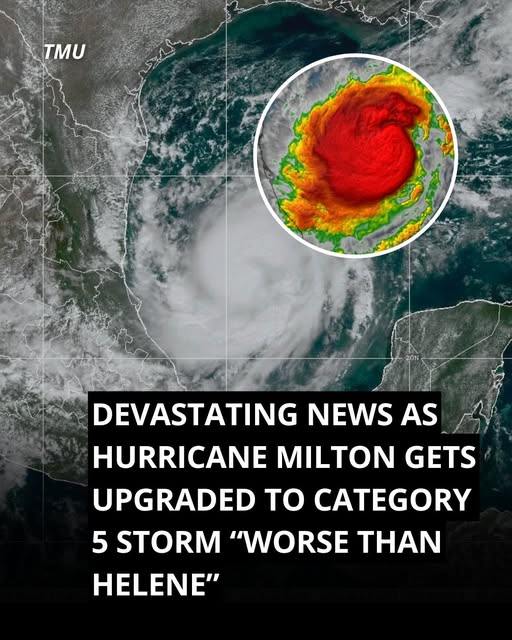
When Hurricane Milton rapidly strengthened into a Category 5 storm during October 2024, emergency officials across Florida’s Gulf Coast increased preparedness efforts and closely monitored the storm’s development. According to weather agencies, the hurricane reached maximum sustained winds of approximately 160 mph while moving through the Gulf of Mexico, making it one of the strongest storms of that season. Meteorologists explained that rapid intensification can significantly increase risks in a short period of time, reducing the amount of time communities have to adjust plans and prepare safely.
Forecast attention remained heavily focused on Florida’s west coast, particularly around the Tampa Bay region, where even small changes in the storm’s path could influence potential impacts. Officials encouraged residents to follow verified forecasts and emergency guidance rather than relying on a single projected track. Weather experts noted that conditions such as coastal flooding, strong winds, and heavy rainfall can vary depending on the storm’s exact movement, structure, and speed as it approaches land.
Emergency management agencies also warned residents about multiple possible hazards associated with the storm, including flooding, power outages, damaging winds, and transportation disruptions. Although Hurricane Milton approached Florida as an extremely powerful Category 5 system, it weakened before landfall and came ashore near Siesta Key on October 9, 2024, as a Category 3 hurricane. Even after weakening, officials reported significant impacts in several parts of Florida, reinforcing the importance of preparation based on overall risk rather than storm category alone.
In response to the approaching hurricane, state and local authorities activated emergency operations, prepared shelters and response resources, and advised residents to secure homes, organize emergency supplies, and follow safety instructions when necessary. The storm later served as a reminder that hurricane risks extend beyond wind speeds alone and can affect many aspects of daily life. Experts continue to encourage residents in hurricane-prone areas to stay informed through trusted weather updates, prepare early, and approach major storms with caution and readiness.