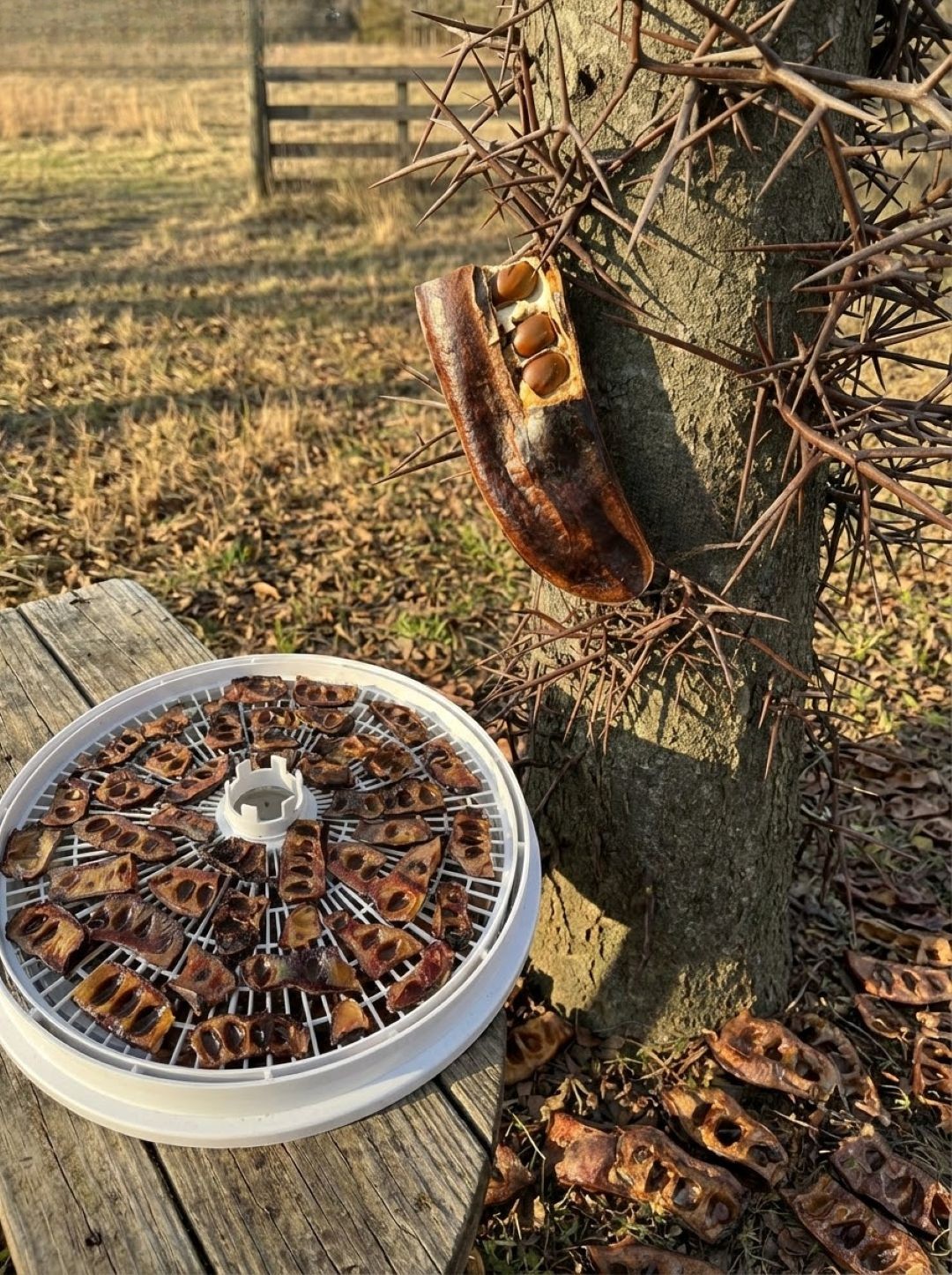
At first glance, it appears to be an ordinary shade tree found along roadsides or across open land. The honey locust, often chosen for its elegant canopy and rapid growth, has a history that extends far beyond its appearance. Long before modern conveniences, this tree quietly supported everyday needs by providing natural resources that were both practical and reliable. For those familiar with its uses, the honey locust was far more than a place to rest on a warm day.
One of the tree’s most recognizable features is its long, curved seed pods, which contain a naturally sweet pulp. This pulp was traditionally enjoyed as a simple source of flavor and energy and was sometimes used to create syrups or lightly fermented beverages. The seeds also had practical value, as they could be prepared into warm drinks or ground into meal. These uses highlight how the tree once offered accessible nourishment when processed foods were uncommon.
The honey locust was also valued for its strong and resilient wood. Known for its resistance to decay, the wood was commonly used for items that required durability, such as fence posts, tools, and structural components. In addition, parts of the tree contain natural substances that produce a gentle lather when combined with water, making them useful for basic cleaning purposes before manufactured products were widely available.
Today, the honey locust continues to play an important role in both natural and developed environments. Its open canopy allows sunlight to reach the ground, supporting surrounding plant life, while its seed pods provide seasonal food for wildlife. Pollinators are attracted to its flowers, and newer cultivated varieties lack the sharp thorns found on wild trees, making them more suitable for landscaping. Overall, the honey locust serves as a reminder that familiar elements of the landscape can hold lasting and often overlooked value.