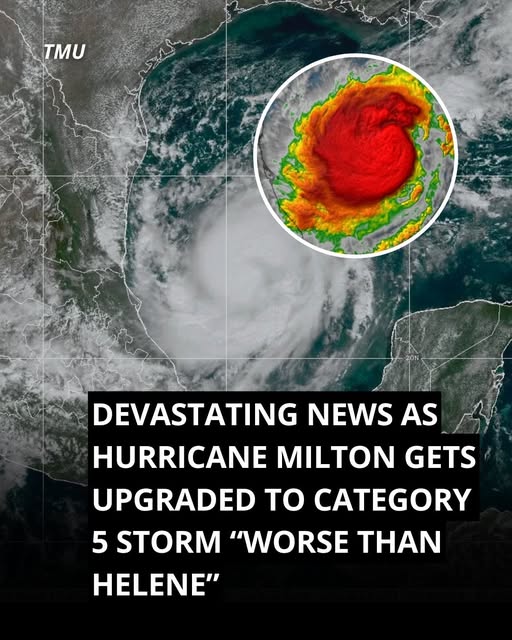
Hurricane Milton has rapidly intensified into a Category 5 storm, placing Florida’s Gulf Coast under close watch as officials monitor the situation carefully. According to the National Hurricane Center, the storm is producing sustained winds near 160 mph (250 km/h), making it one of the strongest storms currently in the Atlantic. Weather reconnaissance aircraft confirmed the rapid strengthening, a process in which hurricanes increase in intensity over a short period of time.
Forecast models indicate that the storm is moving toward Florida, with particular attention focused on the Tampa Bay region. Meteorologists note that even small changes in the storm’s track could significantly affect which communities experience the strongest winds, rainfall, and coastal flooding. Because of this uncertainty, residents across several parts of the state are being advised to stay informed and monitor official weather updates.
Officials have warned that coastal areas could experience significant storm surge in vulnerable locations, along with heavy rainfall across central Florida. Strong winds may lead to structural damage, fallen trees, and power outages in some communities. Flooding is also possible in low-lying areas depending on the storm’s path and how long it remains over land.
State authorities have declared a state of emergency across multiple counties to allow emergency resources to be prepared in advance. Emergency response teams and National Guard members have been mobilized to assist with evacuations, response efforts, and recovery operations if needed. Residents are encouraged to secure their homes, prepare essential supplies, and follow guidance from local officials as the storm approaches.