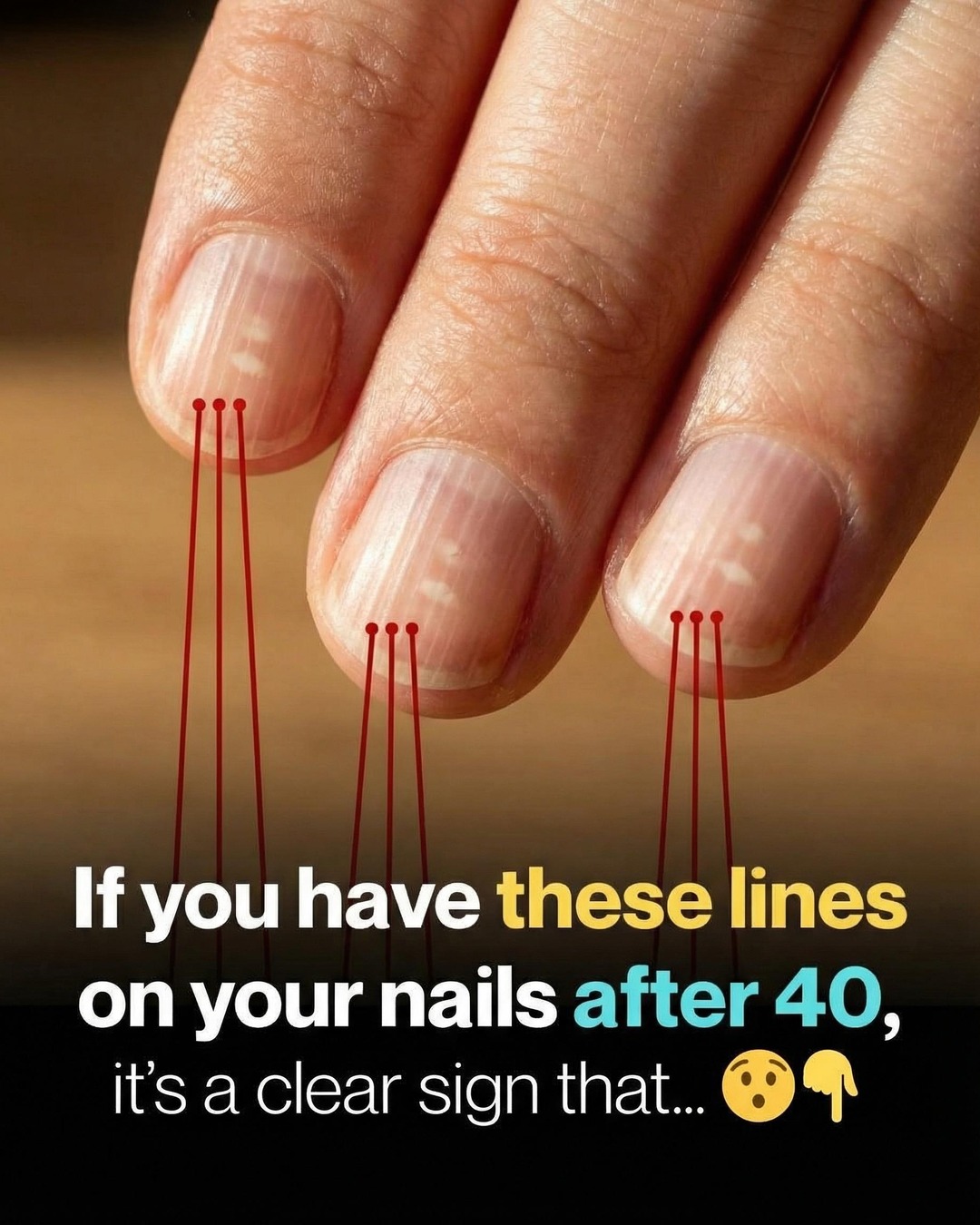
Noticing thin vertical lines running from the base of your fingernails toward the tips can be surprising, especially when they become more visible with age. Many people begin to notice these changes after the age of 40, and in most cases they are considered a normal part of the aging process. Vertical nail ridges are typically linked to natural changes in the body rather than a sign of illness.
Similar to how skin develops fine lines over time, nails can also change as the body ages. These lines, often called longitudinal ridges, run from the cuticle to the tip of the nail. Nails are primarily made of keratin, and their smooth appearance depends on steady and consistent cell growth. As the body matures, this process can slow slightly, which may lead to uneven layers of keratin that appear as ridges.
Dryness can also make these ridges more noticeable. As nails age, they may retain less moisture, causing surface changes to become easier to see. Frequent hand washing, regular use of sanitizers, or exposure to strong cleaning products can remove natural oils that normally help keep nails smooth and flexible. In some cases, lifestyle factors or minor nutritional gaps may also influence nail texture.
For most people, simple nail care can help keep nails looking healthy. Moisturizing nails and cuticles regularly, wearing gloves when doing household chores, and filing nails gently can help reduce splitting and dryness. Staying hydrated and maintaining a balanced diet also support overall nail health. In many situations, vertical ridges are simply a natural change that comes with age.