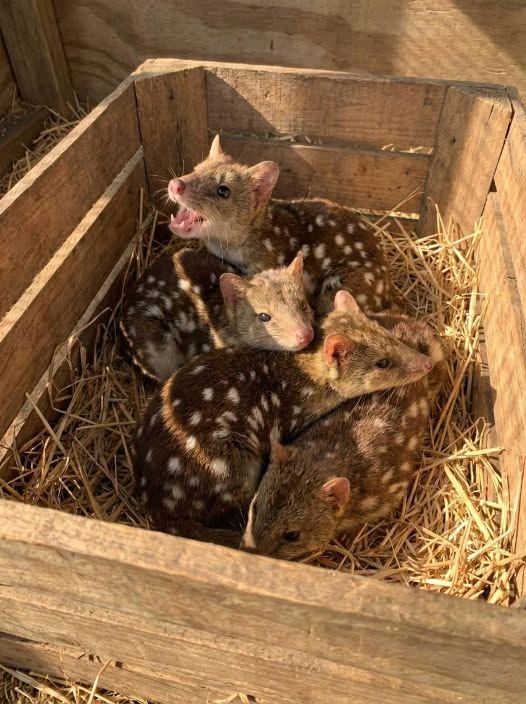
Hope has returned to the Australian outback. For years, the western quoll seemed almost like a memory, represented by fading tracks in the red dust. Now, inside a remote sanctuary, researchers have witnessed something extraordinary: tiny, living pouch young offering evidence that a species can recover from the brink. At Mt Gibson Wildlife Sanctuary, the newborn quolls represent more than a conservation milestone—they provide a powerful reminder that decline does not always have to end in extinction.
The western quoll has faced decades of habitat destruction, invasive predators, and shrinking territory. Its recovery has required careful planning rather than simple optimism. Conservation teams worked to create safer denning areas, restore vegetation, control threats, and closely monitor the animals as they adjusted to their surroundings. Every stage has been documented through motion-activated cameras placed throughout the sanctuary.
Among the animals being monitored was Aang, whose nighttime movements helped researchers understand how quickly western quolls could adapt when given a genuine opportunity to thrive. The cameras captured important moments that might otherwise have gone unnoticed, providing valuable information about the animals’ behavior and progress. Each healthy mother and newly observed joey represents another encouraging step forward.
The newborn quolls now symbolize what determined conservation efforts can achieve. Their arrival demonstrates that habitat restoration, predator management, scientific monitoring, and patience can help rebuild wildlife populations that once seemed destined to disappear. For researchers, every new joey is a quiet victory. For Australia’s ecosystems, it offers something even more important: the possibility that these remarkable native predators can once again establish themselves across parts of their natural range.