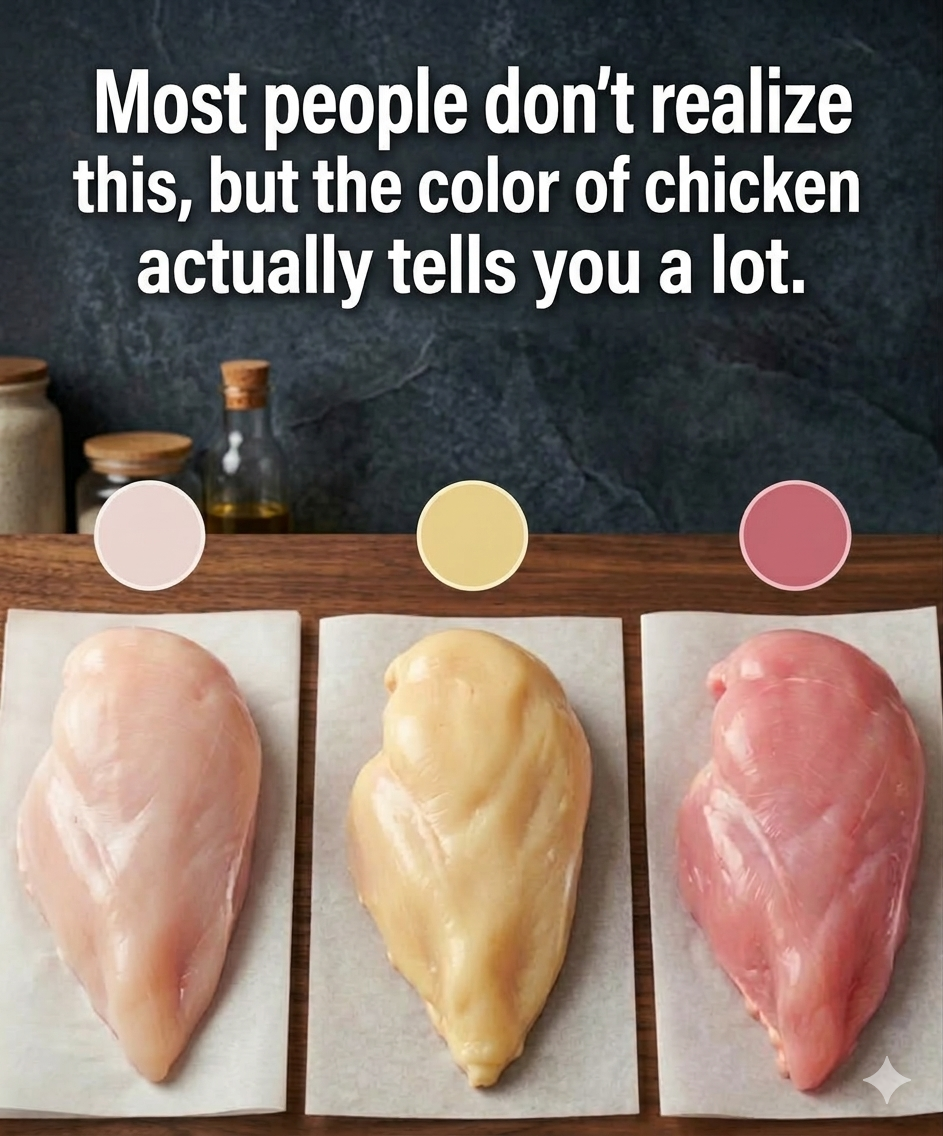
When it comes to chicken, the color of the meat often raises questions about its quality, taste, and overall value. Some pieces may appear pale or slightly pink, while others have a deeper yellow tone. At first glance, it may seem like certain colors indicate a healthier or more natural product, but color alone is not a reliable measure of freshness or quality.
Paler chicken is often linked to large-scale production systems, where birds are raised indoors with controlled diets and bred for efficiency. These conditions can influence both the appearance and flavor of the meat. In contrast, chicken with a yellowish tint is often associated with birds that consume feed rich in natural pigments, such as corn or plant-based ingredients, which can affect the color of the meat.
Chickens raised in more open or varied environments may develop firmer texture and more pronounced flavor due to differences in diet and activity. However, it is important to note that color can sometimes be influenced intentionally through feed adjustments, meaning a deeper yellow shade does not always guarantee a specific farming method or higher quality.
To better evaluate chicken, it is helpful to look for labels such as “organic,” “free-range,” or “pasture-raised,” which can provide insight into farming practices. Freshness can also be assessed by checking for a mild, neutral smell and a firm texture. Ultimately, selecting chicken depends on individual preferences, including budget, taste, and production methods.