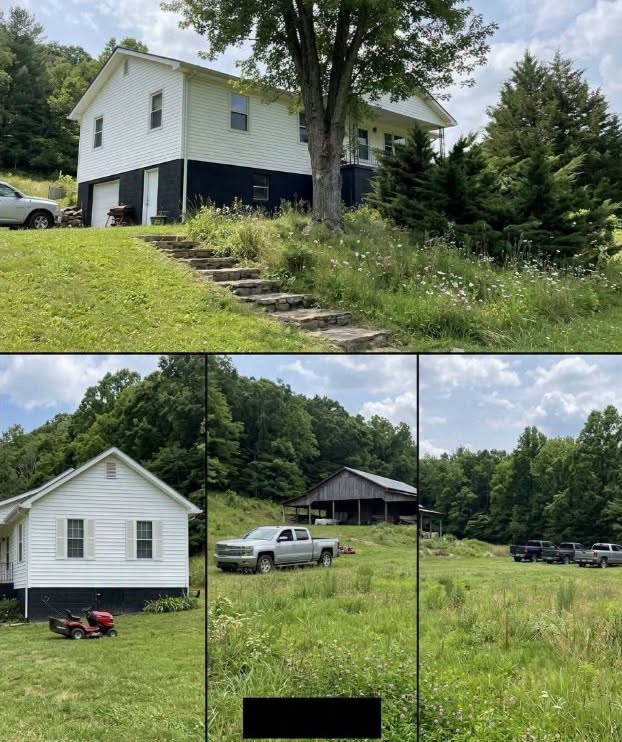
The small mountain cottage stood quietly among towering trees on more than thirty-five acres of peaceful countryside. Built in 1900, the home overlooked rolling hills and dense forests that had
changed very little over the decades. Although the house measured less than nine hundred square feet, it had already received several important updates, including a durable metal roof, newer windows, and
sturdy flooring. Inside, however, many of the rooms remained unfinished, leaving plenty of space for a new owner to create a comfortable home while preserving its historic charm.
The surrounding property offered walking trails, wildlife, and the kind of quiet that is becoming increasingly rare.
When I finalized the purchase, the realtor handed me an old brass key that workers had discovered beneath a loose porch board during routine repairs. No one knew where it belonged, but the previous
owner had requested that it remain with the property because it had been passed down through generations. Curious, I searched every room, every cabinet, and every storage space in the cottage
without finding a matching lock. Before giving up, I decided to explore farther into the woods, where I noticed a narrow stone path almost completely hidden beneath leaves and moss.
The trail led to a weathered wooden door built into the side of a hillside. It blended so naturally with the landscape that it could easily have gone unnoticed. When I tried the old brass key, it turned smoothly,
and the heavy door slowly opened. Behind it was a carefully built underground storage room. Cool air filled the passage, and simple wooden shelves lined the walls. Glass jars, handcrafted tools, baskets,
and sturdy wooden crates had been arranged neatly, showing that the space had once been used with great care.
Rather than feeling mysterious or abandoned, the room reflected thoughtful planning and practical craftsmanship.
On a wooden workbench rested a worn leather journal. Its fragile pages contained handwritten notes from the cottage’s original owner, describing life in the mountains during the early twentieth century.
The journal explained that the underground room had been built to safely store food, important family papers, farming equipment, and household supplies during harsh winters and severe storms.
It also told stories of neighbors sharing harvests, helping repair homes after difficult weather, and working together whenever someone faced hardship.
The writings painted a picture of a close-knit community where cooperation and determination were essential parts of everyday life.
Wanting to learn more, I contacted local historians and preservation volunteers. After examining the structure, they confirmed that it was an excellent example of an early Appalachian storage shelter,
a type that had become increasingly uncommon over the years. They carefully documented the site and explained how similar shelters had helped families protect valuable supplies before modern refrigeration
and transportation became widely available. Their research added meaningful historical context without changing the simple character of the property.
As restoration work continued, I chose to preserve the cottage’s original features whenever possible instead of replacing everything with modern materials. The unfinished rooms were completed using designs that respected the home’s history while providing comfort for everyday living. The underground shelter was cleaned, stabilized, and opened for occasional educational tours, allowing visitors to learn about traditional mountain life and the resourcefulness of earlier generations.
Today, guests come to the property not because it is luxurious, but because it offers a genuine connection to local history. Families enjoy walking the wooded trails, children listen to stories inspired by the old journal, and visitors appreciate seeing how ordinary people built lives through hard work, preparation, and community support. What began as a modest renovation became an opportunity to preserve an important piece of regional heritage. The greatest discoveries are not always valuable because of money—they often remind us of the resilience, traditions, and everyday experiences that connect generations across time.