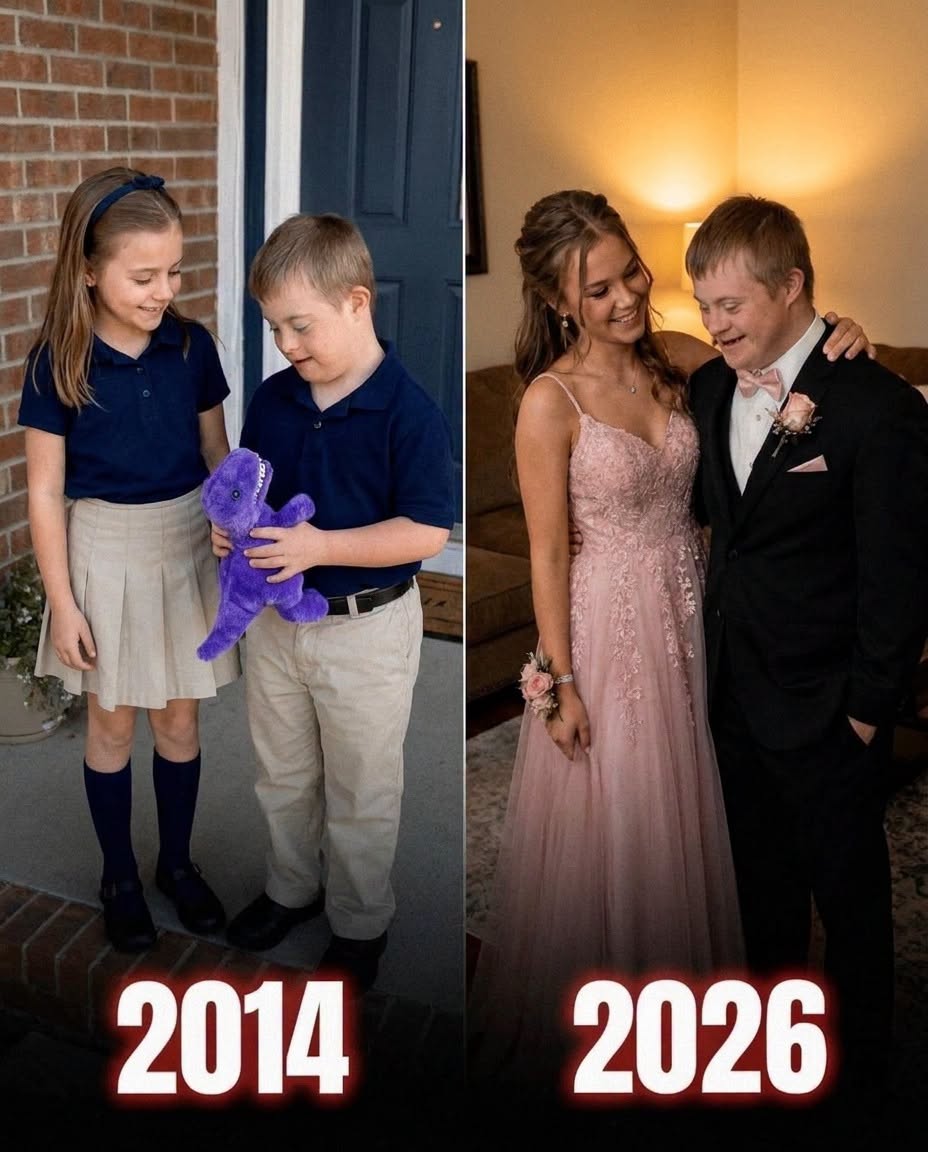
My mother locked my bedroom door on prom night while Noah waited downstairs in a navy suit, holding a rosemary corsage and wearing the bow tie he had bought months earlier. I could hear him laughing
with my aunt while Mom stood in front of me with trembling hands. “You can go with him tonight, Christina, but only on one condition.” I thought she meant curfew, but then I saw the tears in her eyes.
“You have to hear something first,” she said. “About Noah. And about me.” I immediately worried that she was going
to suggest I was doing Noah a favor simply by being his friend. Then Mom sat beside me and said, “I owe both of you the truth.”
Noah and I had been best friends since first grade. We bonded over our dislike of raisins and made a pinkie promise to go to prom together someday. Over the years, our friendship survived changing
interests, adolescence, and my parents’ divorce. When I struggled after Dad left, Noah stayed beside me without demanding explanations. When I failed my driving test, he brought me two ice creams—one
because I had tried and another because he said I had driven terribly. When I wanted to quit painting, he kept my old
dinosaur drawing in his locker to remind me not to give up. He never tried to solve everything. He simply knew how to be there.
What I didn’t know was that during the difficult period after my parents’ divorce, Noah had found my mother upset outside school. He told her that I had stopped eating, laughing, and talking as I used to,
then asked whether I was “broken.” Mom assured him I wasn’t and remembered his response: “I don’t know how to fix people. I only know how to stay.” She asked him to look out for me, and he agreed.
Over the years, however, Mom began wondering whether I was staying close to Noah because I felt responsible for him. “I kept measuring the friendship by what Noah might need from you,” she admitted.
“I never measured it by what he gives.” Suddenly, I understood that our friendship had never been about one person caring for the other. We had always supported each other.
Then Mom explained her condition. She didn’t want me to cancel prom or change my plans. She simply wanted me to go because eighteen-year-old Christina chose to, not because six-year-old Chrissy had
made a promise. I laughed because the promise had stopped being the reason long ago. Downstairs, Mom thanked Noah for being my friend, and he looked confused. “She stays too,” he replied. At prom,
we danced, laughed, and took plenty of pictures. During the first slow song, Noah held out his hand and reminded me of our childhood promise. He stepped on my shoe almost immediately, making us both
laugh. Later, he carried my shoes because my feet hurt, while I carried his jacket because he was warm. Watching us, Mom finally understood that neither of us was rescuing the other or fulfilling an
obligation. We had simply grown up together and continued choosing our friendship.Sometimes, the greatest promises aren’t about obligation at all—they’re about choosing to stay.