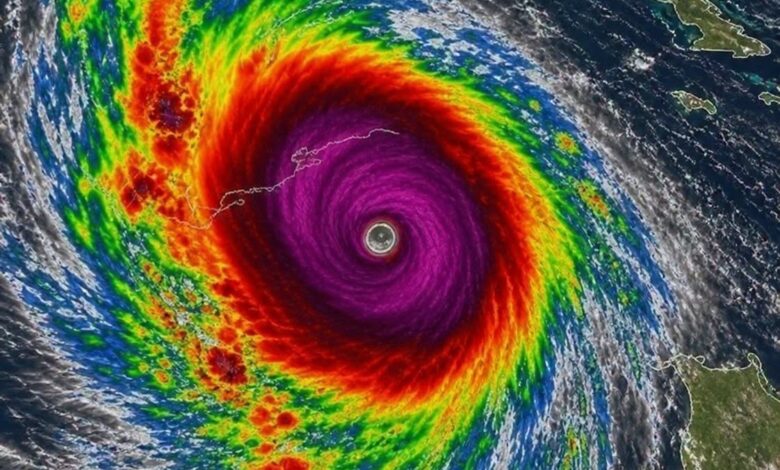
A powerful Atlantic hurricane can strengthen rapidly over warm ocean water, leaving communities less time to prepare for dangerous winds, heavy rain, coastal flooding, and storm surge. A Category 5 hurricane is the highest level on the Saffir-Simpson scale, with sustained winds of at least 157 miles per hour. However, the category measures wind strength only and does not fully describe flooding, rainfall, or storm-surge risks. These dangers can affect areas far from the storm’s center.
The forecast cone shows the probable path of a hurricane’s center, not every location that may experience dangerous conditions. Forecasts can change as satellites, aircraft, radar, ocean measurements, and computer models provide new information. Residents should therefore rely on official weather agencies and local emergency authorities rather than outdated social-media reports. Before a storm arrives, families should review evacuation zones, identify routes, plan for pets and vulnerable relatives, and prepare water, food, medications, flashlights, batteries, chargers, and important documents.
Homeowners should secure outdoor furniture, tools, decorations, and other loose objects, while protecting windows according to local recommendations. Vehicles should be moved away from areas vulnerable to flooding when necessary. Anyone instructed to evacuate should leave early rather than waiting for roads or weather conditions to become dangerous. Those sheltering at home should choose an interior location away from windows and exterior doors. During power outages, generators must remain outdoors in well-ventilated areas and far from doors, windows, and vents because of carbon-monoxide risks.
Floodwater should always be treated as dangerous because it can conceal debris, electrical hazards, damaged roads, and other obstacles. Drivers should never attempt to cross flooded streets. Neighbors can also help by sharing verified information and checking on people who may need assistance. Because a hurricane’s track and intensity can change, residents should continue monitoring official updates. The exact landfall location does not need to be known before preparing. Staying informed, securing property, gathering supplies, evacuating when instructed, and choosing a safe shelter location can give families valuable time to respond calmly and safely.